Single-Point & Multi-Point Blower Door Tests
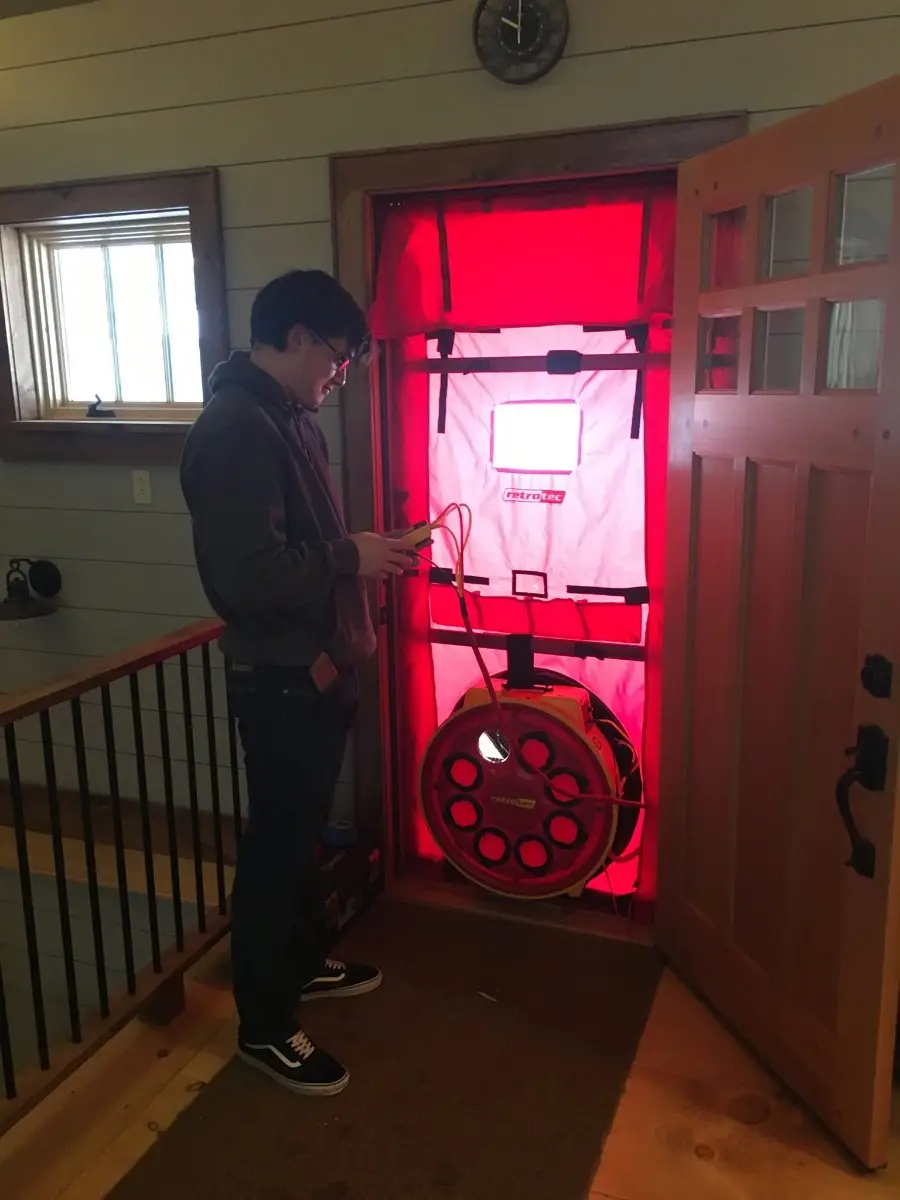
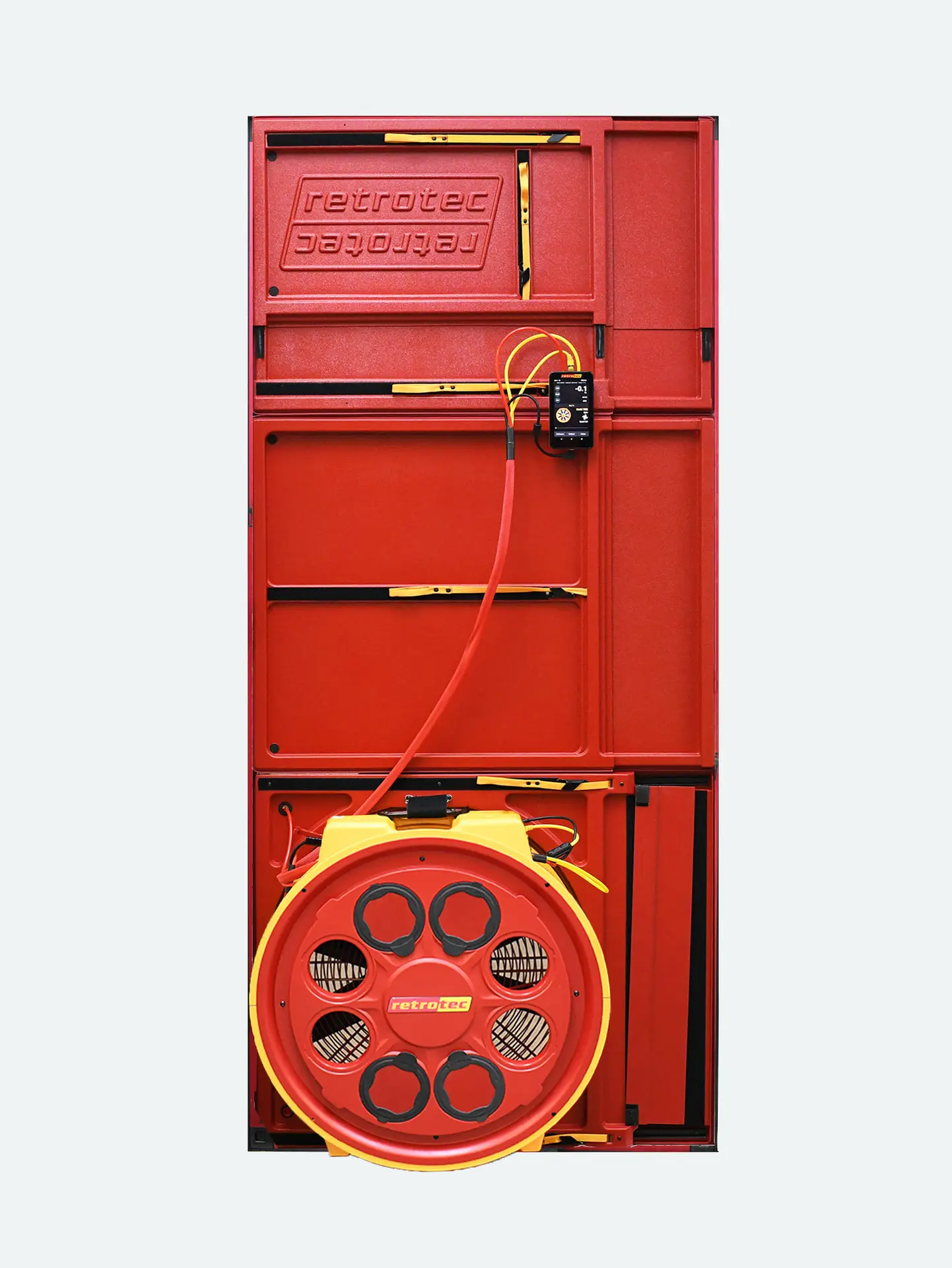
Single-Point Test (CF3R‑ENV‑20a): Measures air leakage at a single pressure ≈50 Pa to report ACH50 for compliance documentation.
Multi-Point Test (CF3R‑ENV‑20b): Records airflow at several pressures to generate a curve, offering greater accuracy and insight into envelope performance. Required for high-performance buildings or tight thresholds.
Total System Air Flow Test
Field verification of HVAC airflow is required:
Minimum 350 CFM/ton for new systems, or 300 CFM/ton for altered systems.
Flow is measured via static pressure probes or certified airflow meter.
Plenum Pressure Matching
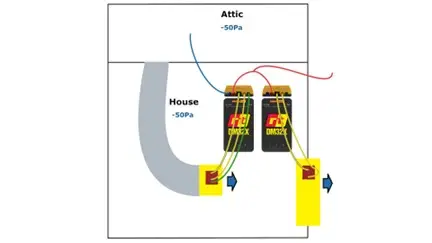
Pressure-probe-based tests compare static pressure inside and outside the plenum to assess airflow and leakage points.
Effective for commissioning balanced systems or exhaust shafts; especially common in multifamily layouts under Title 24.
Using Duct Tester or Blower Door as Powered Flow Hood
Appliances like DucTester or blower-door fans can double as flow hoods when placed at return inlet.
With DM‑32 gauge, this setup directly reports supply fan flow—eliminating the need for separate airflow tools.
(Suggested in video context)The TrueFlow® meter from Energy Conservatory is Title 24-approved for airflow verification; it’s certified and listed by the California Energy Commission.
Leakage to Outside — California-Specific Method
Title 24 allows two options to determine duct leakage to the outdoors:
Percentage of total fan flow: Leakage must be ≤10% of total airflow. Alternatively:
Percentage of system airflow: Total duct leakage must be ≤15%. Test pressures used are ±25 Pa.
These options give flexibility in meeting Title 24 compliance depending on installation type (new vs altered systems).
Why It Matters
Universally applicable: Even in non-CA jurisdictions, blower-door testing, airflow verification, and duct leakage to outside are best practices aligned with IECC and ASHRAE standards.
Flexible methods: Whether you choose system-based airflow or percentage leakage methods, the results are compliant and defensible.
Certified tools: Using approved meters (TrueFlow, DM‑32) ensures test data is valid under state or program audit.
Commissioning synergy: Combining envelope testing, HVAC airflow, and duct leakage in one workflow increases test efficiency and reveals system-wide issues early.
Summary Table
| Test Method | Purpose | Protocol / Standard | Compliance Target |
|---|---|---|---|
| Single vs Multi‑Point | Envelope leakage measurement | CF3R‑ENV‑20a (single) or ENV‑20b (multi) | ACH50 per certificate |
| Airflow Test | HVAC flow validation | Static probe or TrueFlow; ≥300/350 CFM/ton | Code minimum airflow |
| Plenum Pressure Matching | System balancing and leak location | Probe-based comparison of plenum pressures | Used in multifamily/Title 24 |
| Powered Flow Hood | Fan airflow from return side | DucTester / blower-door + DM-32 | Inline validation |
| Leakage-to-Outside | Duct leakage quantification | ≤10% or ≤15% of fan flow at ±25 Pa | Title 24 HERS threshold |