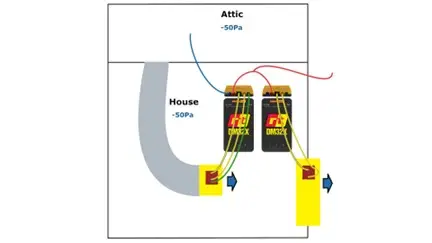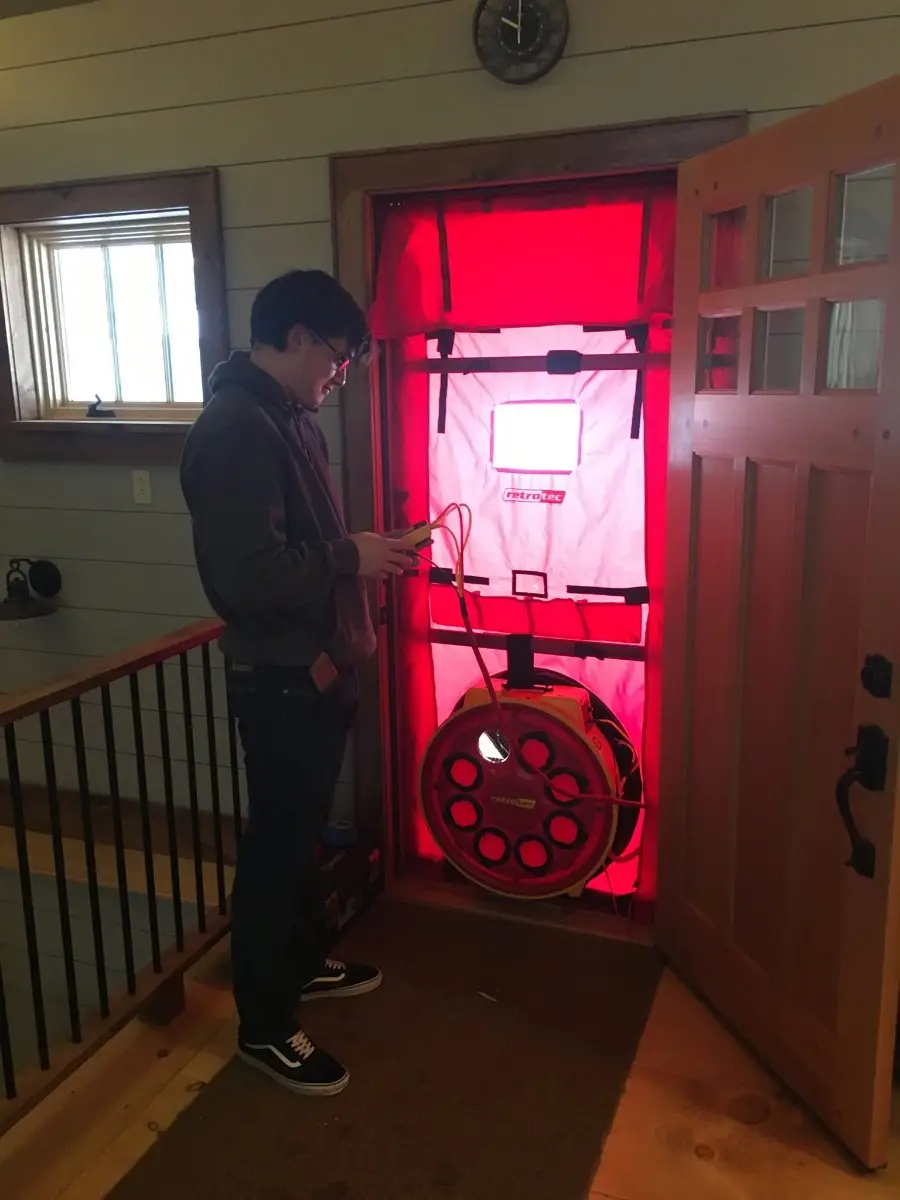
Learn how environmental factors can affect your testing, and how to recognize them. Included are: the moving tube problem; the pinched tube problem; getting water in your tube; and, finally, wind issues. See the massive pressure changes these factors can cause.
Moving Tube Effect
What happens: If your static-pressure tube or probe sways or rubs against a surface, the airflow around it can rapidly shift the gauge reading.
Tip: Secure the tube using Velcro, tape or zip-ties so it is fixed in place during the test.
Pinched Tube Problem
What happens: A tube kinked in a doorway or looped under a chair clamp can partially close the airway, causing false pressure drops or blockages.
Tip: Route tubes through unfettered paths and use probe protectors where they pass through doors or ceilings to avoid pinching.
Water in the Tube
What happens: Moisture that condenses or drips into tubing creates temporary blockage or baseline drift, leading to erratic gauge behavior.
Tip: After testing in moist conditions, disconnect tubes, blow them out, and allow them to fully dry before reuse.
Wind & Ambient Airflow
What happens: Outdoor wind gusts or airflow near open windows can cause massive pressure changes in exposed tubes.
Tip: Use a static-pressure probe (like a metal-tipped tube) and keep the gauge inlet shielded from moving air when working outdoors.
Why These Errors Matter
| Symptom | Possible Cause | Impact |
|---|---|---|
| Rapid or wild pressure swings | Moving or wind-exposed tube | Erratic readings that don’t stabilize |
| Slow pressure drift or drop | Pinched/blocked tube | False indication of leakage |
| Noisy, unstable readings | Water in tubing | Sensor errors or clogged ports |
These errors can dramatically distort your airflow or leakage measurements—by 10–90%, which is far more severe than typical gauge calibration issues
Pro Tips for Reliable Testing
Secure tubing so it stays still and away from obstructions.
Protect tubes passing through surfaces—using door jamb protectors or probe tips.
Flush and dry tubing after use in humid conditions.
Use static-pressure probes outdoors or in gusty environments.
Observe the gauge: abrupt changes or excessive stalling likely hint at environmental interference.
Final Takeaway
Environmental factors are often the hidden cause behind unstable or inaccurate pressure readings. By proactively securing tubing, protecting against kinks, removing moisture, and shielding from wind, you can ensure consistent and precise measurements—no matter where you’re working.