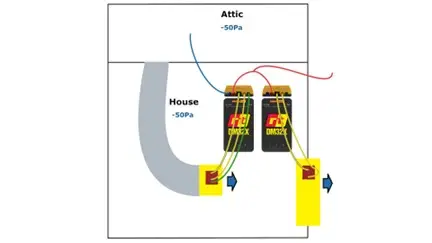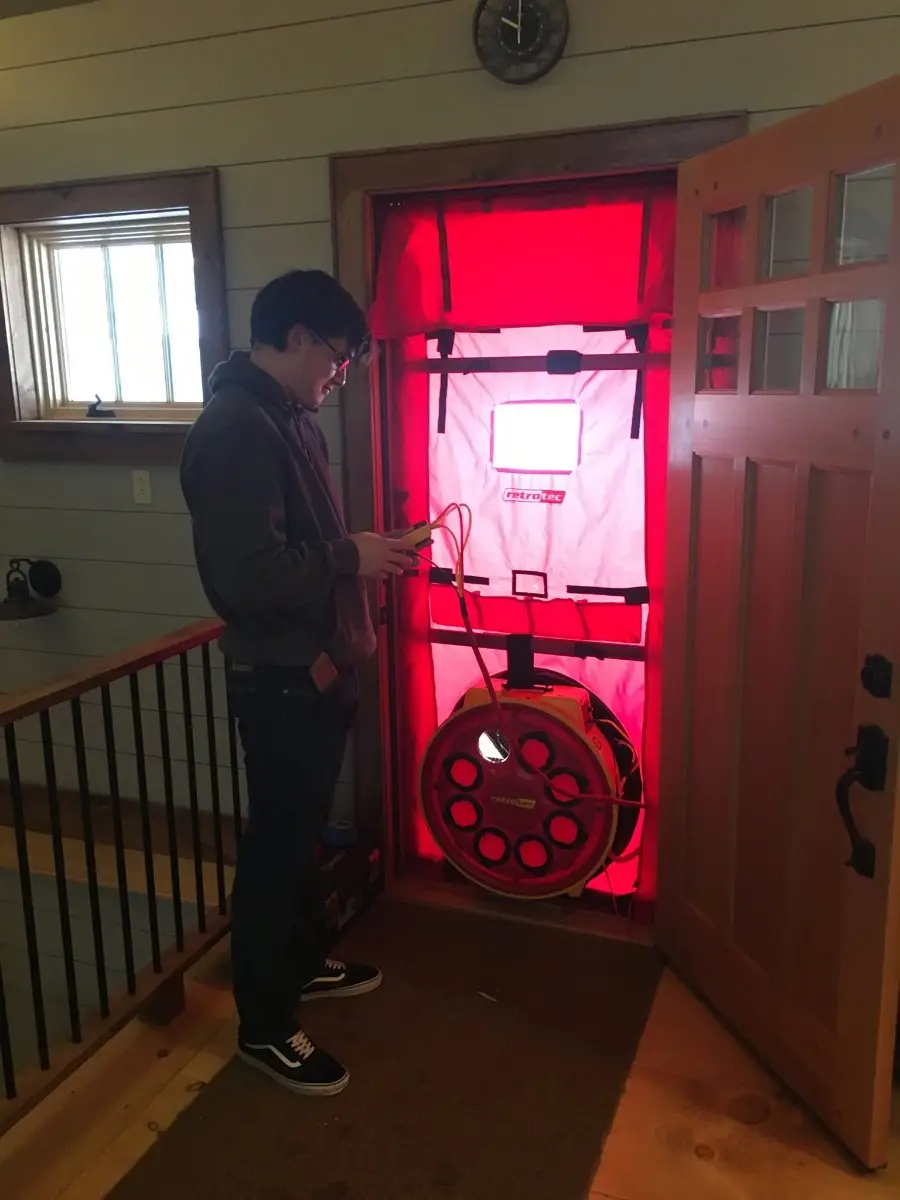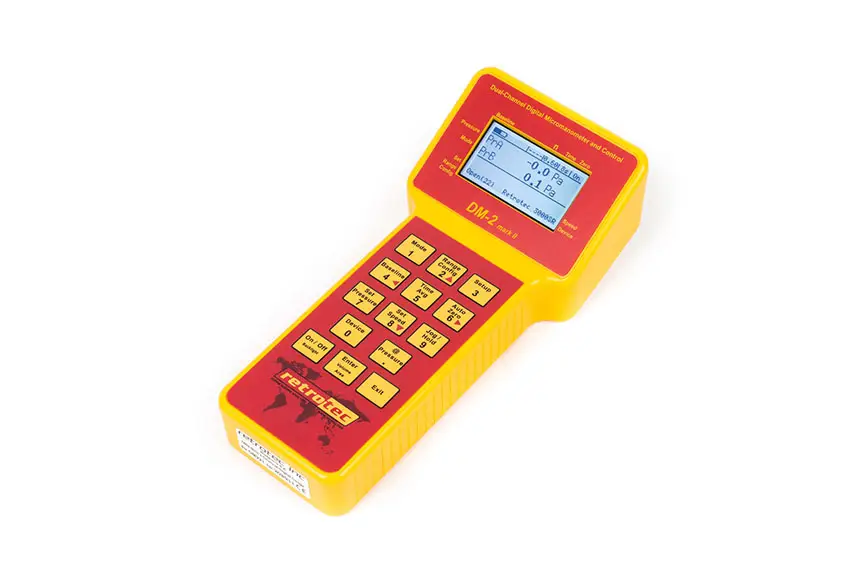
Know the right time to take readings while using this handy feature. Also, learn why you should pay attention to how your gauge remembers settings.
Understanding Time Averaging
Time averaging is a function available on digital pressure gauges, such as Retrotec’s DM32, that smooths out short-term fluctuations in pressure readings. This is particularly useful in environments where minor, rapid changes in pressure occur due to factors like wind, HVAC systems, or transient air movements.
When to Use Time Averaging
To ensure accurate readings, it’s essential to use time averaging under the following conditions:
Windy Conditions: If external wind is causing pressure fluctuations, enabling time averaging can help stabilize the readings.
Variable Airflow: In scenarios where airflow is inconsistent, such as during HVAC operation, time averaging can provide a more consistent measurement.
However, it’s important to note that time averaging can introduce a delay in the gauge’s response to rapid changes in pressure. Therefore, it should be used judiciously to balance accuracy with responsiveness.
Importance of Gauge Settings
The video also emphasizes the significance of understanding how your gauge retains and recalls settings. Inconsistent or incorrect settings can lead to erroneous readings, affecting the reliability of the test results.
For instance, if the gauge is set to a specific averaging time or range that doesn’t align with the current testing conditions, the readings may not accurately reflect the building’s airtightness.
Practical Tips
Regular Calibration: Ensure your gauge is calibrated regularly to maintain accuracy.
Consistent Settings: Before each test, verify that the gauge settings are appropriate for the specific conditions of the test.
Documentation: Keep a record of the settings used during each test to maintain consistency and traceability.