Why Test?
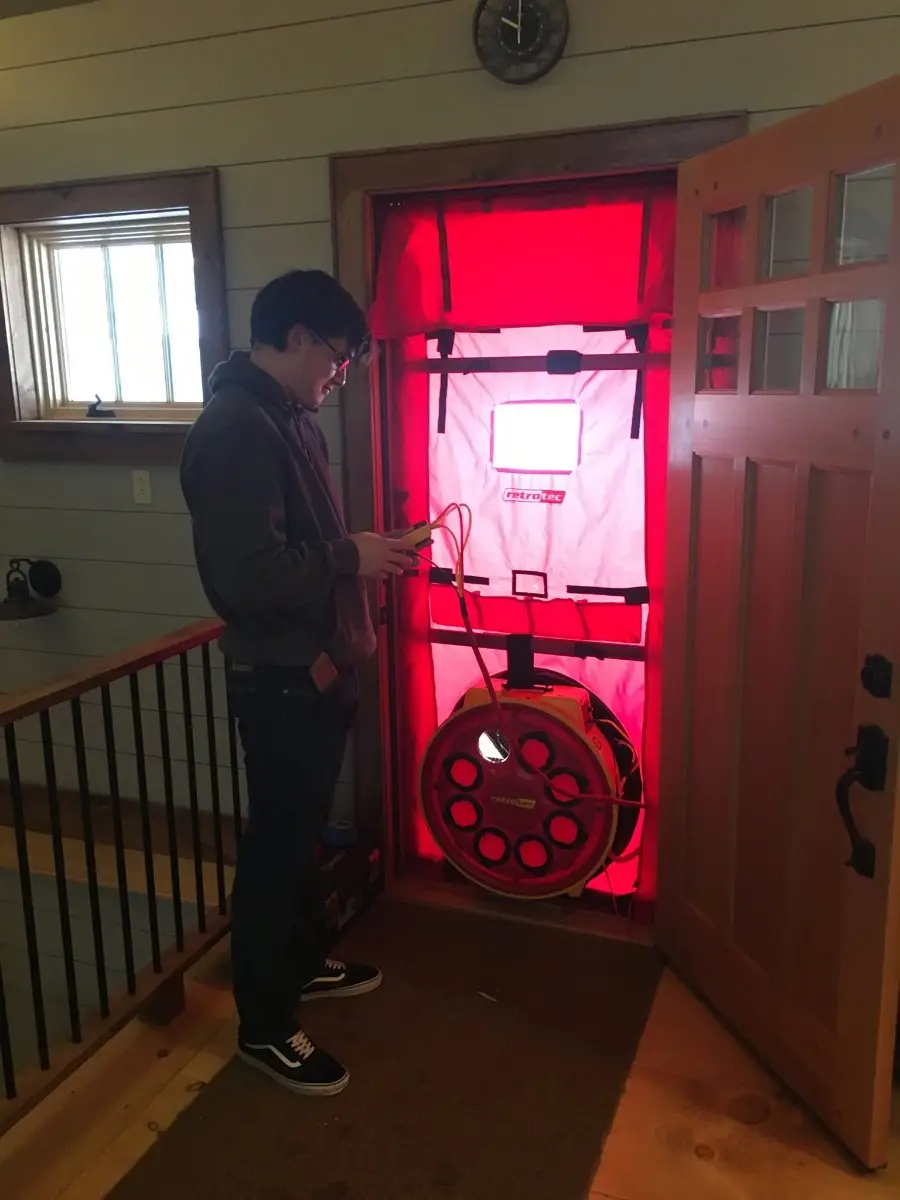
Quantifies envelope leakage: A blower door determines exactly how much air is leaking at a standard pressure (commonly 50 Pa), offering clear insight into building performance.
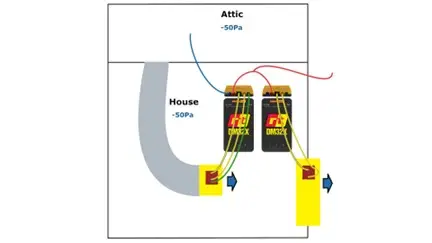
Locates leaks efficiently: Under pressure, leaks become visible via thermal imaging, smoke pens, or draft detection—making it easy to identify weak points.
Validates sealing efforts: Use it before and after air-sealing to show real improvement, reinforcing work quality and building trust.
Requirements for a Blower Door Test
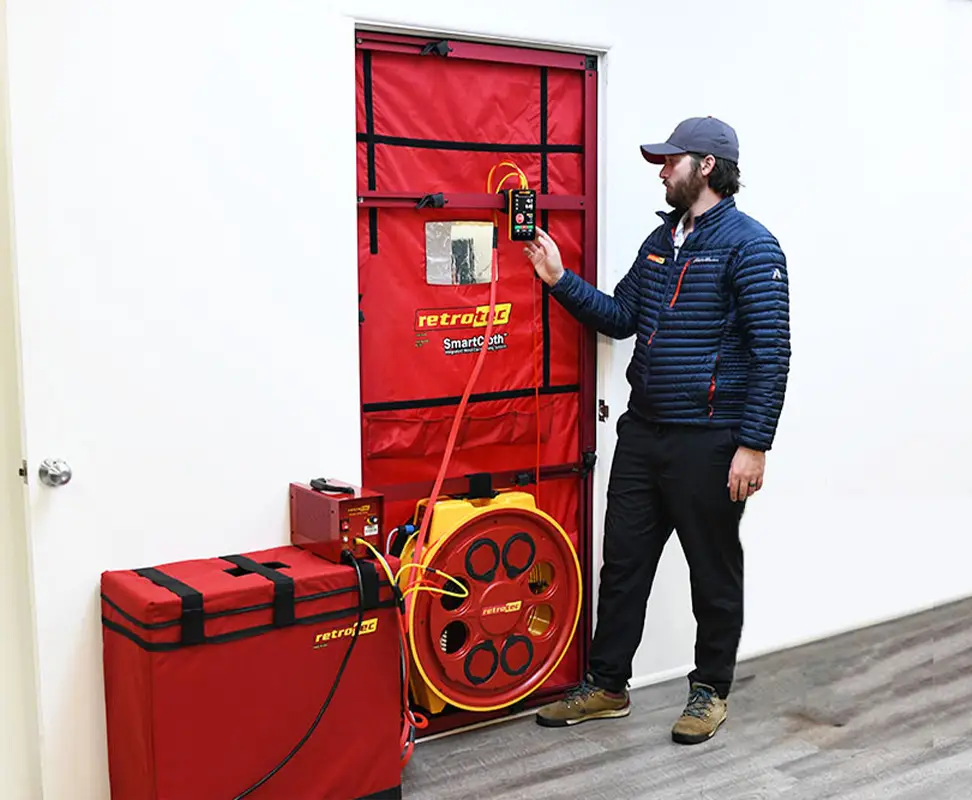
Must be conducted using calibrated fan and gauge equipment following standards such as ANSI/RESNET/ICC 380, ASTM E779, or E1827.
Test indoors, either in depressurization or pressurization mode, usually at 50 Pa.
Results are reported as CFM50 (airflow at 50 Pa) and converted into ACH50 (air changes per hour), or sometimes leakage per square foot.
In many jurisdictions (e.g. IECC 2021), tests must be performed by certified professionals (HERS or BPI) and documented in signed reports.
Additional Uses Beyond Code Compliance
Mid-construction diagnostics: Test while systems are exposed to catch leaks early—before insulation and drywall.
Duct-to-outside leakage assessment, by combining blower-door flow with pressure pan or register tests.
Post-sealing validation, to demonstrate actual performance gains from retrofit or air-sealing interventions.
Blower Door as the Ultimate QC Tool
Highest level of Quality Control (QC): Measures the most significant system of a building—the envelope—making it the best single metric of construction integrity.
Built-in Quality Assurance (QA): By using consistent setup, trained technicians, and calibrated gear, you catch issues early and systematically maintain high standards.
Visual and measurable feedback: Crews can pinpoint defects during testing and immediately act, reinforcing training and accountability.