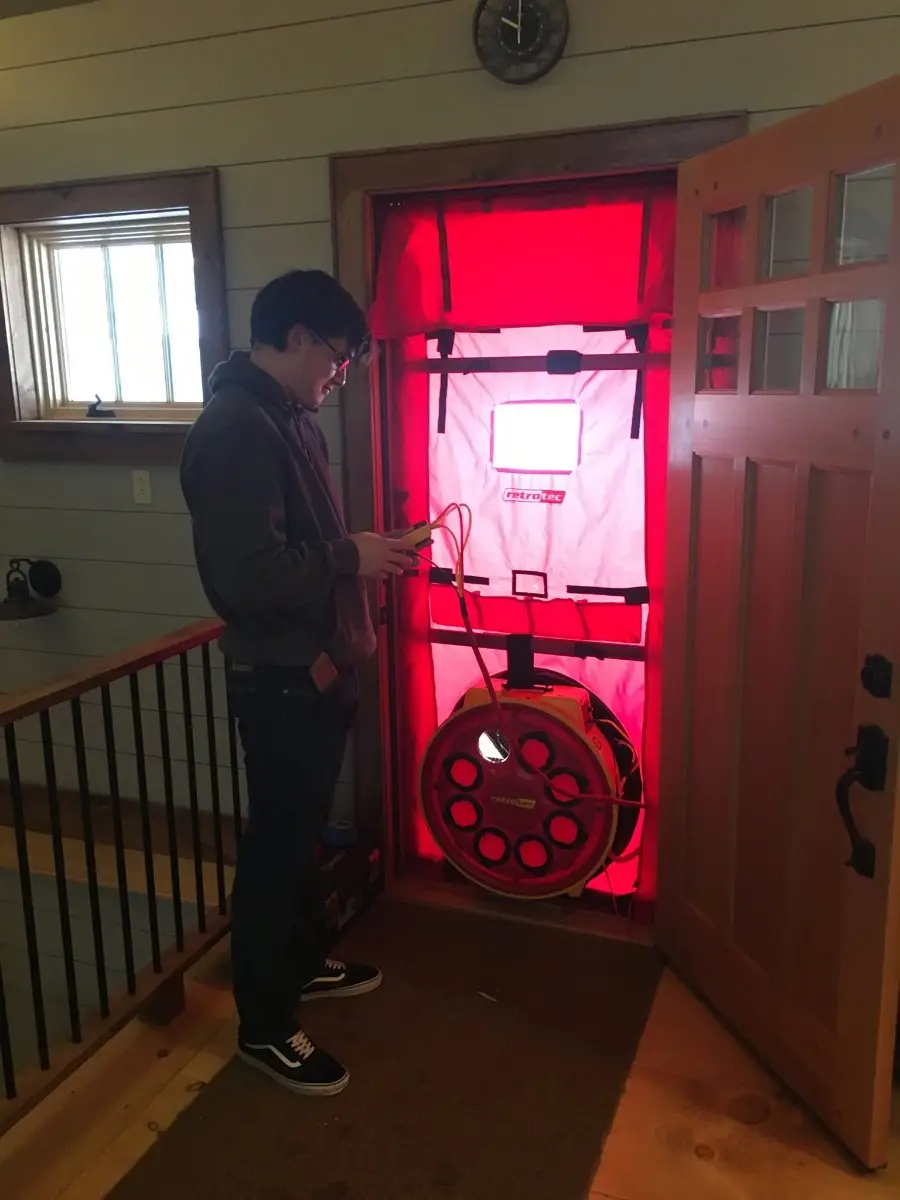
A demonstration of the smoke puff of a Retrotec Air Current tester.
Smoke puff testing is a time-tested and visually compelling way to identify air leakage in buildings. In Part 3 of Retrotec’s five-part Air Current Tester series, viewers are given a hands-on look at how this method can quickly expose problem areas in air barriers, duct systems, and enclosure assemblies.
Seeing the Invisible
Air moves invisibly—but not when smoke is involved. This video demonstrates how technicians use controlled smoke puffs to reveal airflow patterns during a blower door test. When released near windows, ducts, or door seams, the smoke trails clearly show whether air is entering or escaping the space.
The direction, speed, and stability of the smoke provide instant clues:
A steady stream of smoke moving into a crack suggests a leak under negative pressure.
Smoke blowing away indicates positive pressure leakage.
If the smoke swirls or drifts slowly, it may reveal minor or indirect leakage paths.
Why It Works
Smoke puff testing remains popular because it:
Visualizes leakage in real time, making it easy to pinpoint and explain issues to clients.
Requires minimal equipment beyond the blower door setup and smoke emitter.
Helps guide air sealing efforts, ensuring attention is focused on the right spots.
Best Practices
To get accurate results from smoke puff testing:
Conduct the test in a still-air environment—turn off HVAC systems, fans, and close all windows.
Start near likely leakage areas: attic hatches, electrical outlets, baseboards, and window frames.
Take video or photo documentation to include in reports or for homeowner education.