Why Testing is Critical
Clean agents are discharged at high pressure (~5–25 psf or several hundred Pa), and the room must contain that pressure without structural damage.
([turn0search2], [turn0search1])Leakage also affects how long the agent remains at effective concentration—known as the hold time.
([turn0search2], [turn0search1])
Door-Fan Measurements & Annex C Models
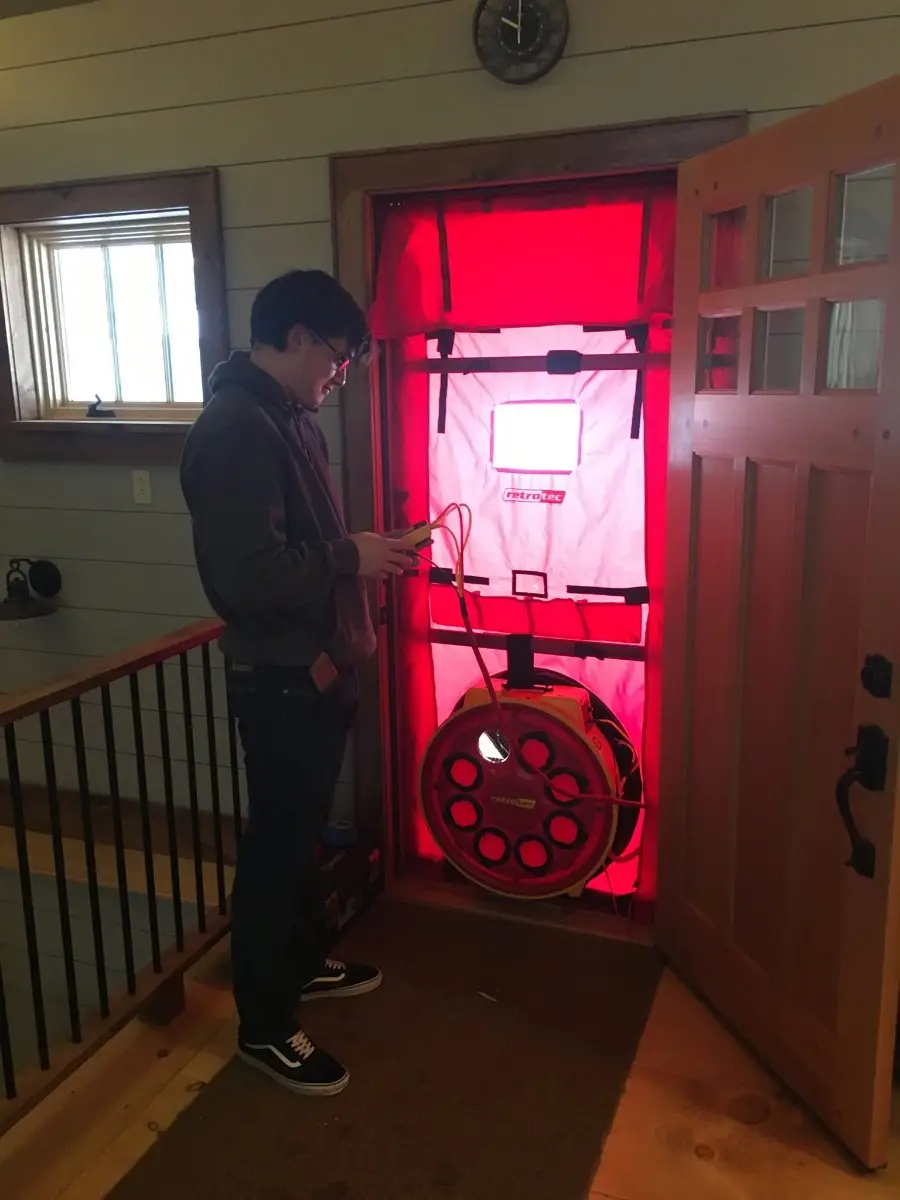
A door-fan test measures leakage area by pressurizing and depressurizing the space; results feed into Annex C formulasin NFPA 2001 to predict how long the agent will remain at protective levels and what peak pressures will be reached.
([turn0search2], [turn0search1])
Dual Leakage Area Measurements
NFPA 2001 now requires two distinct leakage measurements:
Hold-Time Leakage – to determine how well the room retains agent over time.
Peak-Pressure Leakage – used to ensure pressure during discharge doesn’t exceed structural limits—per a “specified enclosure pressure limit.”
If hold-time sealing could create dangerously high peak pressure, a pressure relief vent (PRV) may be required.
([turn0search1], [turn0search2])
Best Practices in Design & Testing
Solid seals at ceilings and continuous wall connections above ceiling tiles.
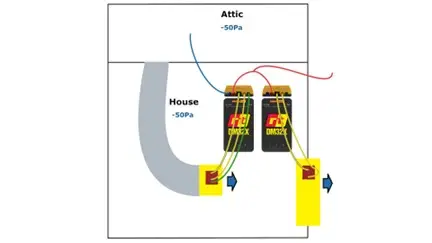
False ceilings require both upper and lower leakage tests—using separate fan ports.
Installing a PRV ventilates excessive pressure if hold-time sealing inadvertently raises peak pressure past the safe threshold.
([turn0search2], [turn0search1])
Final Takeaway
This webinar and NFPA-compliant testing ensure system designers and installers can:
Calculate and verify both hold time and peak pressure using door-fan data and Annex C.
Ensure occupant safety by avoiding structural over-pressurization.
Maintain compliance by performing the dual-measurement enclosure integrity test as required