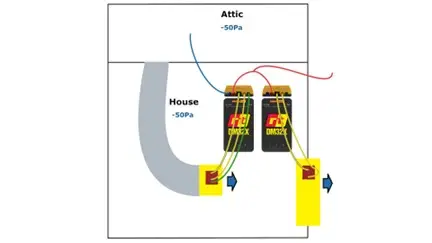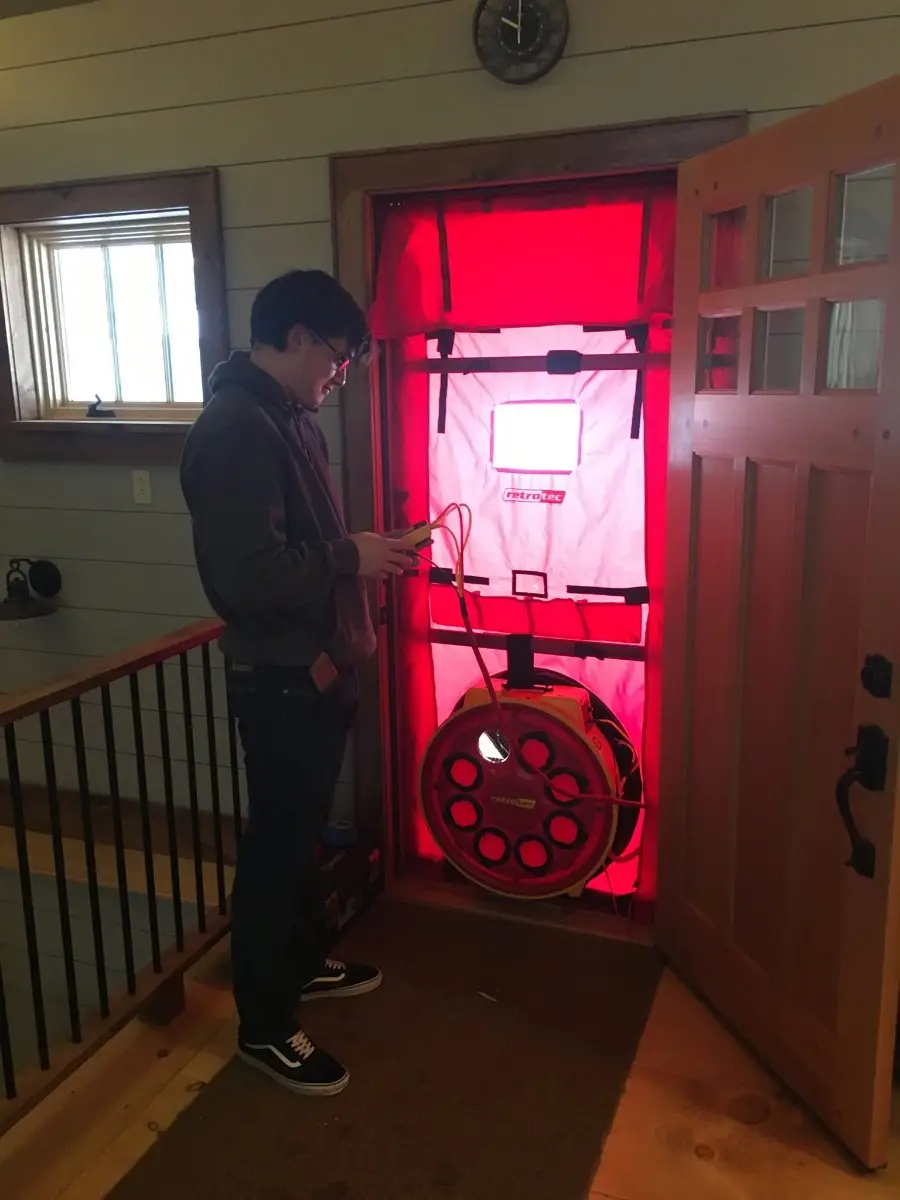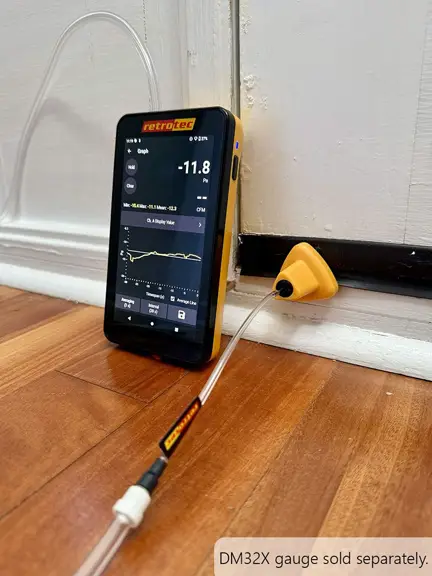
Watch a webinar about Zone Pressure Diagnostics, or ZPDs. This video discusses:
- Benefits and limitations of Zonal Pressure Diagnostics(ZPD)
- Best practices for accurate results
- Reference tube locations for testing
- Common mistakes and solutions
- Interpreting the results
Watch related past videos about Zone Pressure Diagnostics or sign up for live webinars.
Benefits of ZPD
ZPD is primarily used to evaluate air barrier effectiveness between different zones within a building, such as:
Attics and living spaces
Crawlspaces and basements
Garages and main dwelling units
Adjoining apartments or rooms
Key advantages include:
Helps identify leakage paths that standard blower door tests may miss
Reveals pressure imbalances between connected spaces
Guides effective air sealing and retrofit efforts
ZPD is especially valuable in multifamily, retrofit, or diagnostic scenarios where visual inspection is limited.
Limitations of ZPD
While ZPD offers useful insights, it has constraints:
Assumes steady-state conditions – Uncontrolled airflow or HVAC operation can skew results
Requires blower door testing as a prerequisite
Does not quantify leakage—only provides pressure relationships
Sensitive to tube placement and building dynamics (wind, stack effect)
It’s best used as a supplement to other tests, not a standalone measurement of leakage.
Best Practices for Accurate ZPD Results
Set up a blower door to pressurize or depressurize the building to a standard reference pressure (typically 50 Pa).
Use reference tubing connected to a digital gauge (e.g., DM32) to measure pressure in adjacent zones.
Isolate zones when possible by closing interior doors or sealing openings.
Ensure consistent environmental conditions (no wind, HVAC off).
Always zero your gauge before taking pressure readings.
Reference Tube Locations
Where you place your tubing directly affects the reliability of your data. Suggested locations include:
Attic hatches or vents
Crawlspace or basement doors
Behind dropped ceilings
Garage/laundry doors
Party walls or stairwells
Use caution when fishing tubing through small gaps or mechanical chases, as this could introduce localized pressure errors.
Common Mistakes & Solutions
| Mistake | Solution |
|---|---|
| Placing tubes too close to fans or leaks | Position tubes away from airflow sources |
| Not allowing pressures to stabilize | Wait for steady readings before recording |
| Leaving interzonal doors open | Close doors and note all boundary conditions |
| Misinterpreting ΔP readings | Refer to known target values and context |
Interpreting the Results
The goal of ZPD is to understand how well each zone is connected—or separated—from the primary conditioned space.
A ΔP of 50 Pa (same as test pressure) = well-separated, well-sealed zone
A ΔP near 0 Pa = highly connected zone (leaky or unsealed)
Intermediate values suggest partial connectivity and potential leakage paths
Use the results to prioritize air sealing, evaluate retrofit work, or verify new construction air barriers.