Watch a webinar from Retrotec about calibration vs accuracy for air duct testing and blower door equipment.
- What happens during laboratory testing for fans and gauges
- An inside look at the actual calibration process for a Retrotec system
- How to self-check your fan and gauge
Contact support@retrotec.com for answers to your calibration questions.
What Happens During Official Laboratory Calibration
Retrotec performs both fan and gauge calibration under ISO/IEC 17025 standards in an accredited laboratory. All measurements are traceable to National Institute of Standards and Technology (NIST), ensuring high precision and compliance with standards like ASTM E1554 and RESNET/ICC 380.
Fans are tested across their full operating range, with specific range plates installed; airflow vs. pressure curves are verified and documented.
Gauges are cross-examined under controlled pressures to ensure accuracy on all channels, including temperature compensation and flow conversion.
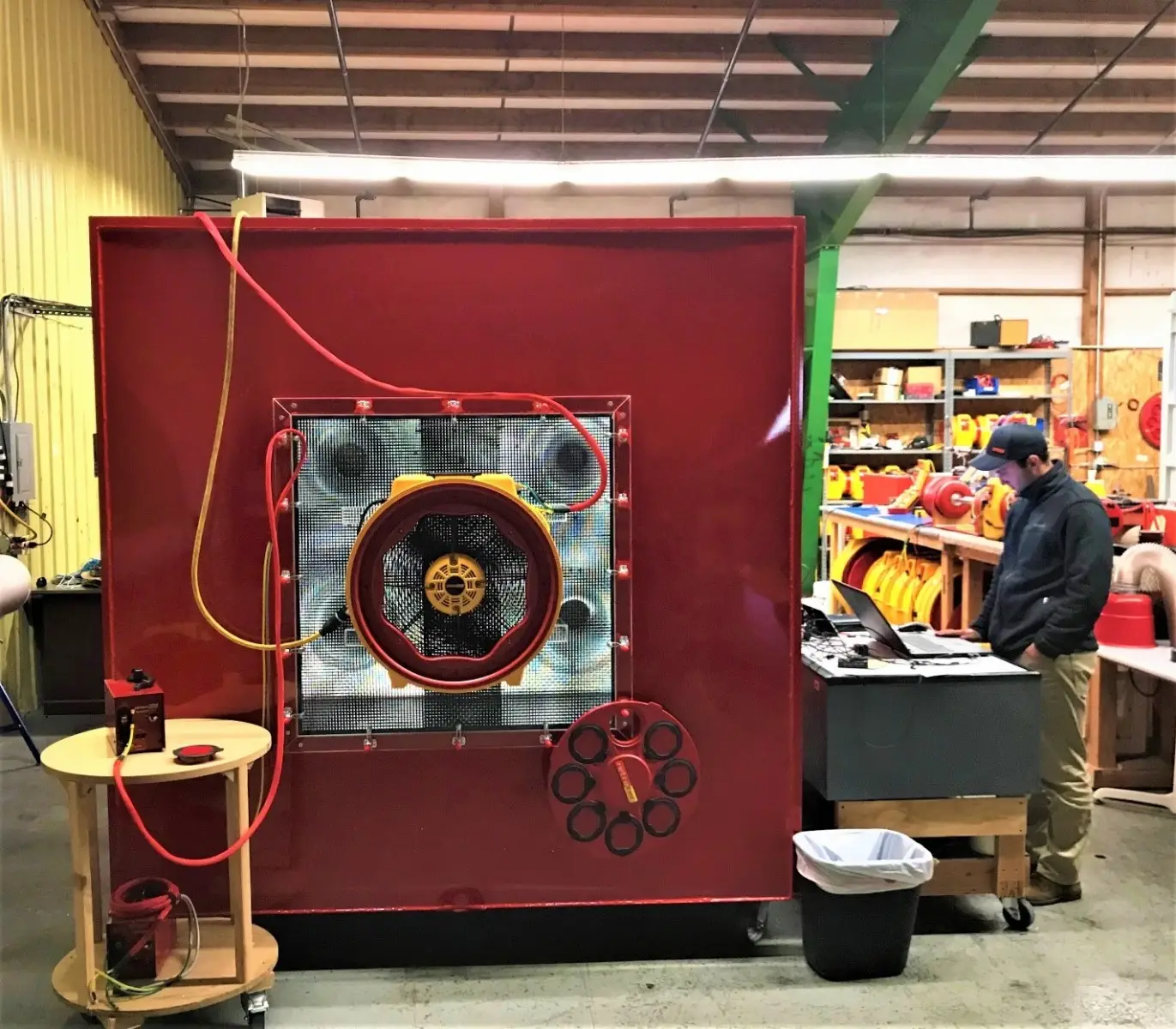
The complete fan‑gauge‑tubing system is tested as an integrated unit to confirm real-world accuracy before shipping. Each unit receives a certificate and is shipped with sealed labels showing serial, ranges, and date.
Inside the Retrotec Calibration Process
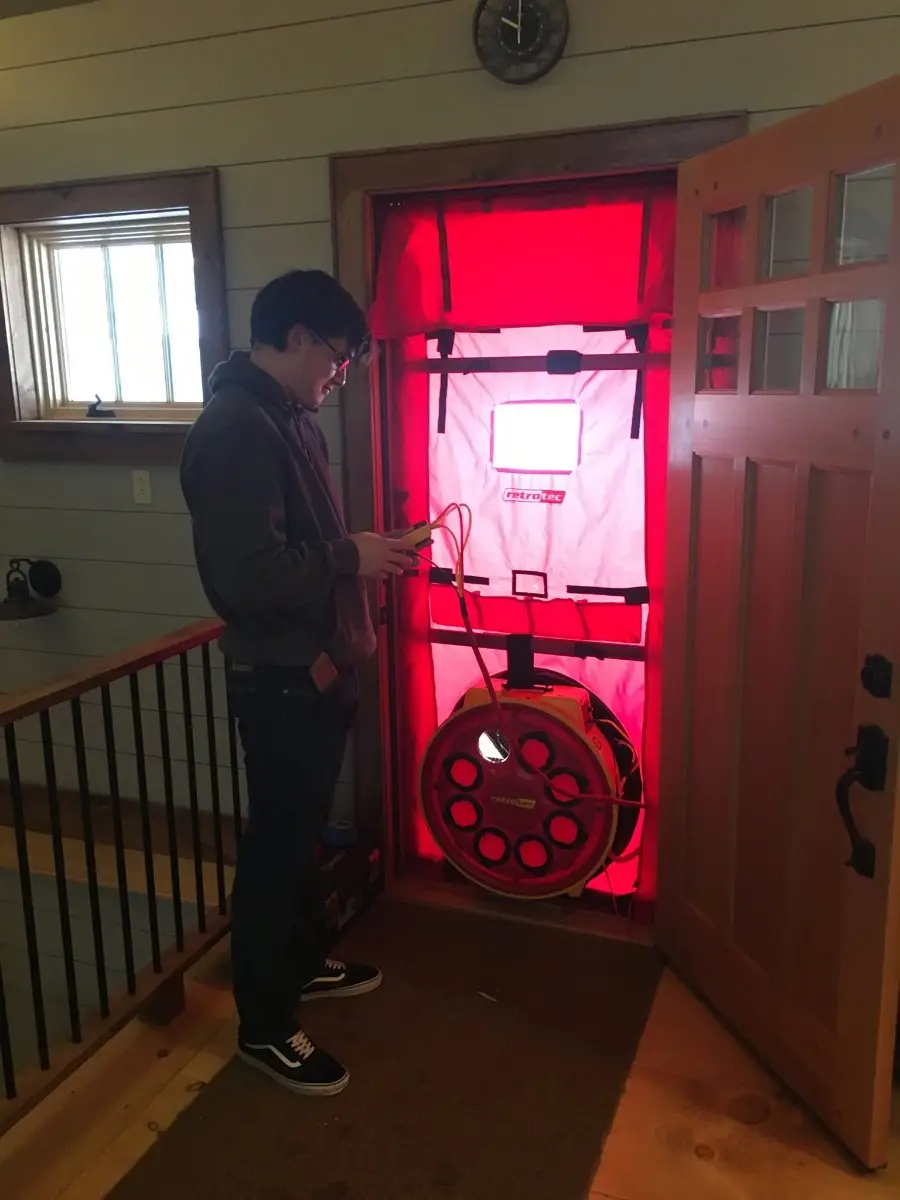
System verification: Fan, gauge, umbilical, and pressure plates are assembled as they would be in the field.
Airflow profiling: Airflow output at key pressure points is compared to certified performance curves.
Gauge channel validation: Each pressure channel is exposed to known standards to certify drift and accuracy.
Certification & documentation: A calibration report outlines detailed results and traceability data.
Self-Check Procedures You Can Do in the Field
While full calibration must be done in a lab, you can maintain accuracy by performing simple checks:
Gauge & Tubes Field Verification
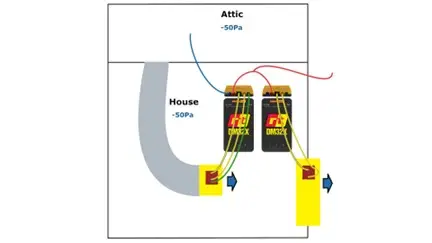
Weekly (or pre-test) perform a cross-port pressure check: connect one tube between Channel A and Channel B inputs or reference ports. Stabilized pressure readings from both channels should match within ±2% over about 5 seconds.
Verify tubing integrity—pinches, moisture, or blockages are common sources of error and affect match accuracy.
Fan Operational Check (User-Conducted)
Use a certified flow plate or known set-point at 25 Pa to confirm fan flow is within ±5% of the calibration value.
Repeat the test periodically or whenever flow rates seem off—this validates both the fan and proper plate selection.
Why This Calibration Process Matters
Lab calibration establishes baseline accuracy, ensuring that each component operates within strict tolerances.
Field self-checks preserve that accuracy during everyday use—highlighting tubing faults or drift before they impact test results.
Emphasizing Quality Assurance (QA)—through training, routines, and pre-test field checks—yields more dependable and repeatable results than relying on Quality Control (QC) after the fact.
Summary Table
| Component | Calibrated in Lab | Field Self-Check |
|---|---|---|
| Blower Door / Fan | Tested for accurate fan output curves | Flow plate test at 25 Pa ±5% |
| Digital Gauge (e.g. DM‑32) | Checked for channel accuracy and drift | Cross‑port tube check ±2% stability over time |
| Tubing & Connections | Clean and verified in controlled setup | Inspect, replace, and re-check before tests |