
You will understand how to calculate ventilation for ASHRAE 62.2-2013.
Bathrooms: 50 CFM (intermittent) or 20 CFM (continuous)
Kitchens: 100 CFM (intermittent) or 5 ACH continuous
(turn0search7)
Local fans count toward whole-house requirements, so you can “double-dip” them.
The total required outdoor airflow (Qtot) is calculated via:
Qtot = 0.03 × Afloor + 7.5 × (Nbr + 1) [in CFM]
Afloor = floor area (ft²)
Nbr = number of bedrooms (at least 1)
In metric: Qtot = 0.15 × Afloor(m²) + 3.5 × (Nbr + 1) L/s
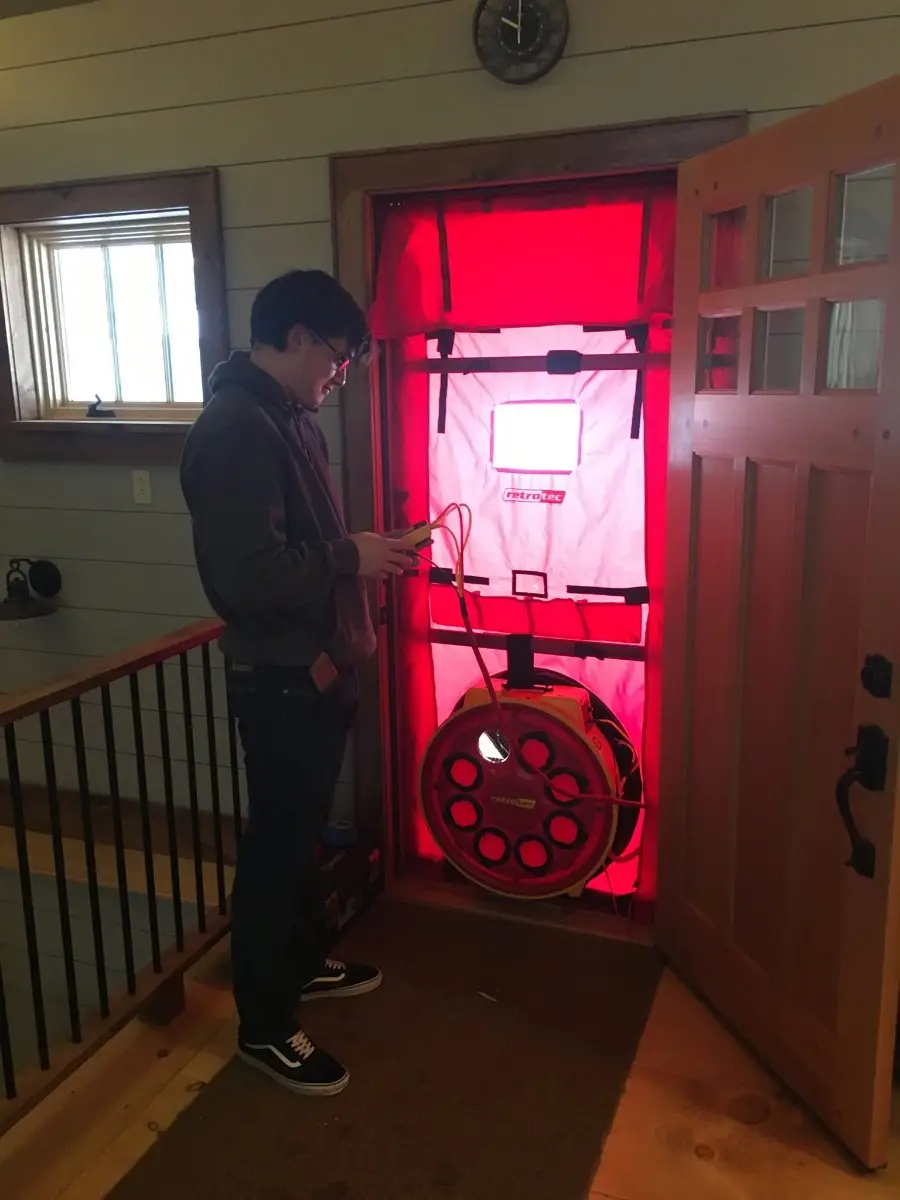
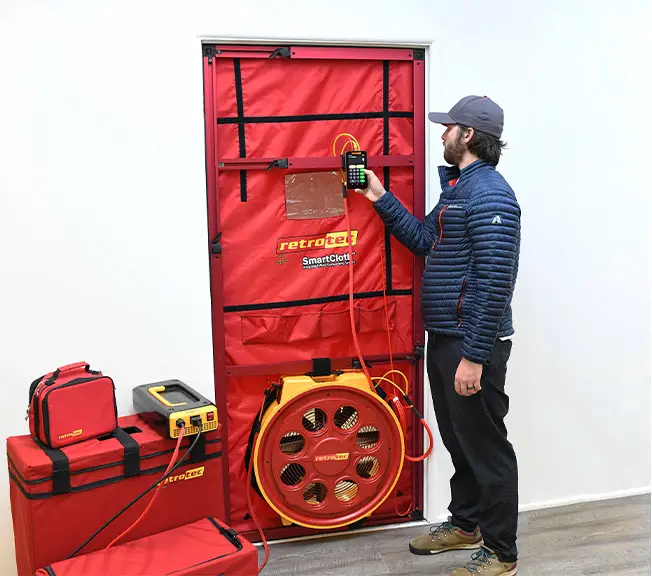
If a blower-door test is done, infiltration credit (Qinf) is subtracted:
Qfan = Qtot − Qinf
Qfan = mechanical ventilation needed
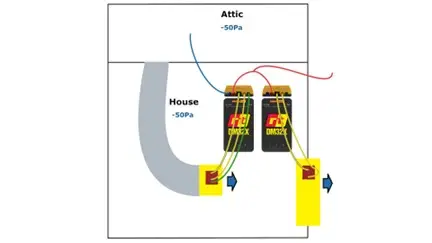
Qinf = infiltration credit (from multi-point tests via ASTM E779 or CGSB)
Qinf may not exceed ⅔ of Qtot for new construction
Continuous systems: supply/run fan at Qfan CFM continuously.
Intermittent systems: Qon (on-cycle rate) is determined so that average ventilation meets Qfan, adjusted using factors from Table 4.2
For a 2,400 ft² home with 3 bedrooms:
Qtot = 0.03 × 2400 + 7.5 × (3 + 1) = 72 + 30 = 102 CFM
Suppose infiltration test yields Qinf = 30 CFM
Required mechanical is Qfan = 102 − 30 = 72 CFM
An intermittent system running 50% of the time would operate at ~144 CFM to average 72 CFM ventilation.
Combines continuous area-based and occupant-based ventilation methods.
Offers infiltration credits—when validated by blower-door testing—to potentially reduce mechanical load.
Accommodates continuous or intermittent systems, including local exhaust offsets.
Clearly defined in ASHRAE Standard 62.2‑2013 Sections 4.1–4.5, with comprehensive guidance on credits, system types, and intermittent operation.