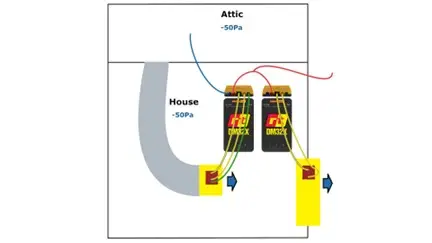
This five part series looks what an air leakage test of a typical house might look at. In this part, we look at what you can see once the door fan is running. Depending on whether you’re pressurizing or depressurizing, there are a variety of tools available to identify leak locations.
Test Set-up
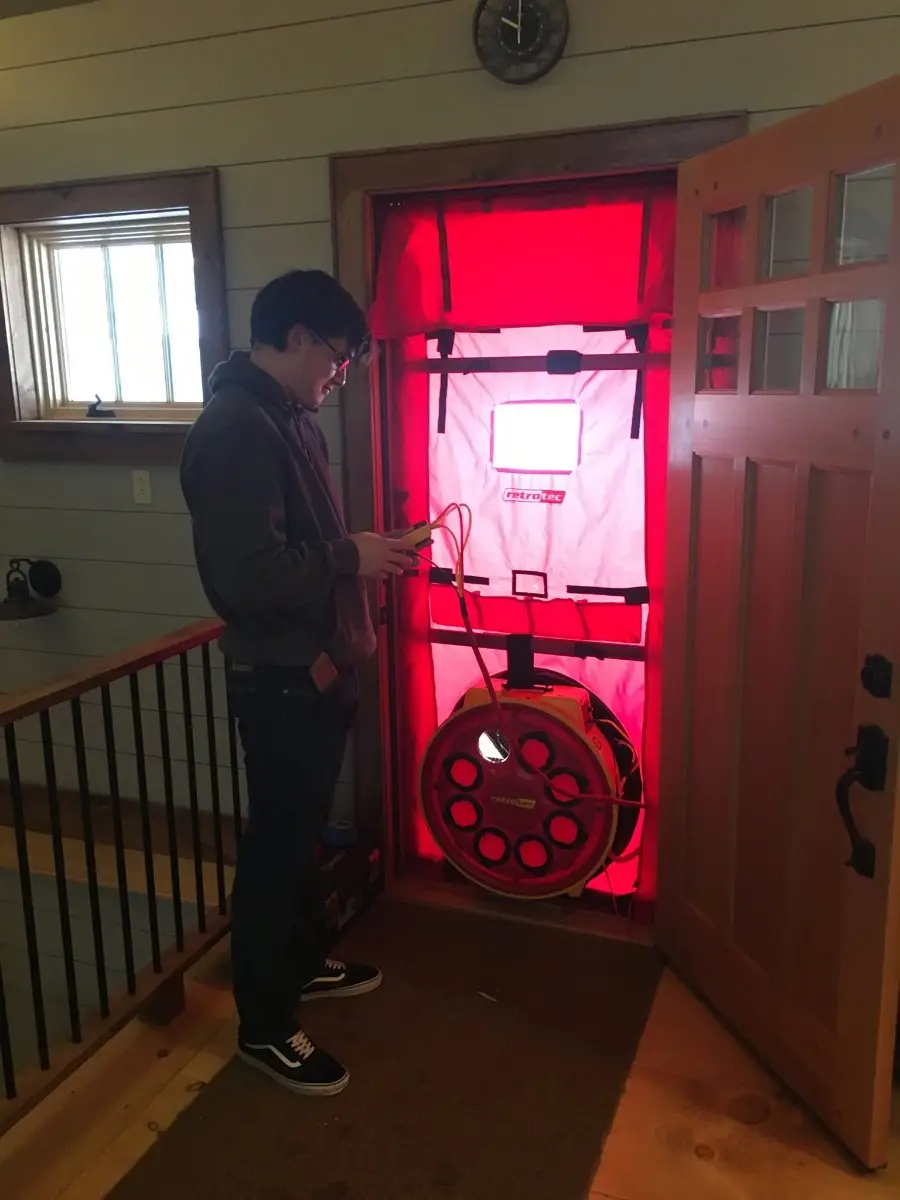
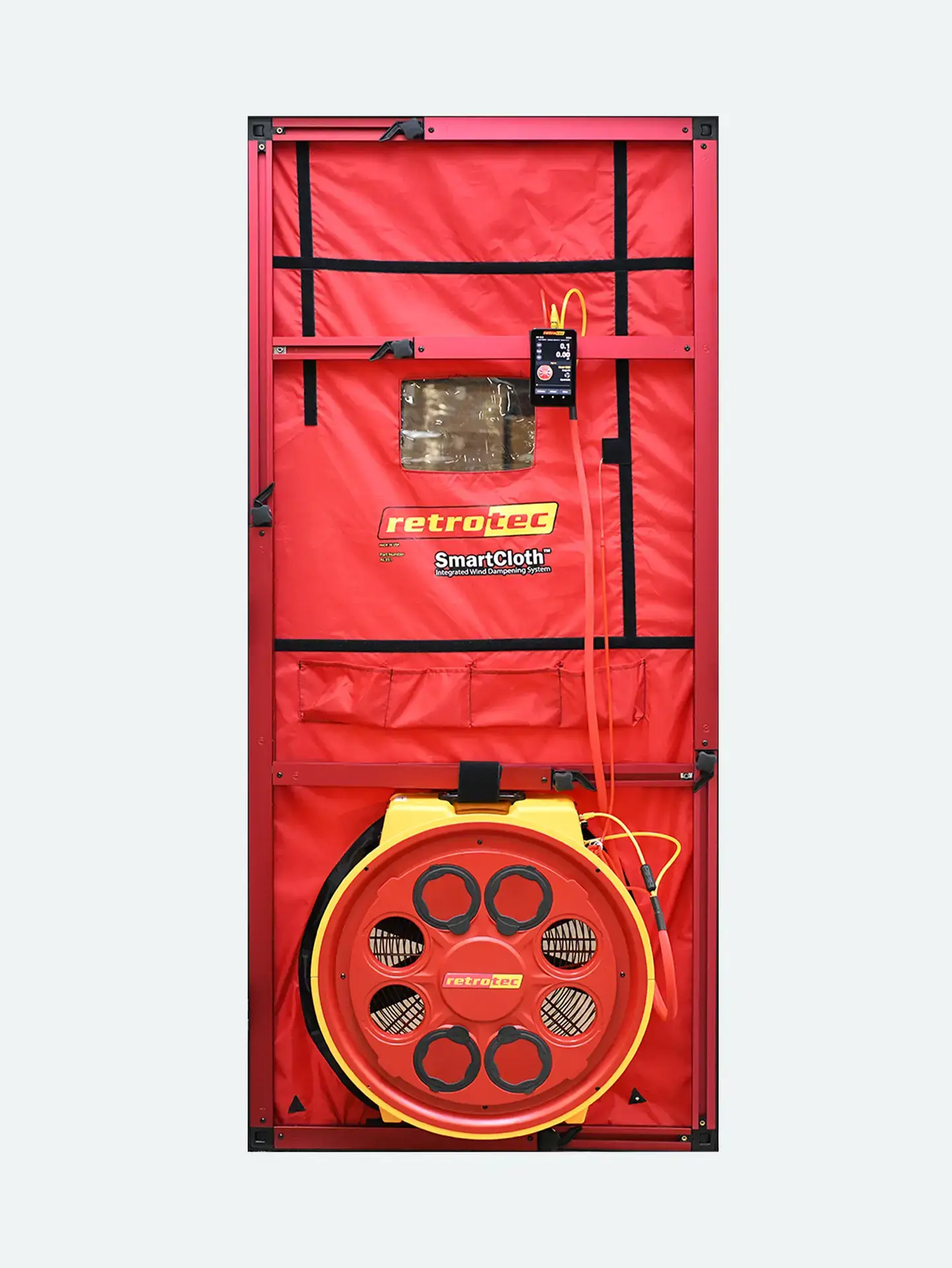
Equipment Used: A Retrotec blower door system is installed in an exterior door frame.
Preparation: All windows and doors are closed, and all exhaust fans are turned off to ensure accurate measurements.
Test Procedure
Installation: The blower door fan is mounted in the door frame, and a digital manometer is connected to measure pressure differentials.
Pressurization: The fan depressurizes the interior of the house to a standard pressure difference (commonly 50 Pascals).
Measurement: The manometer records the airflow required to maintain the pressure difference, indicating the total air leakage rate.
Importance of a Test
Energy Efficiency: Identifies areas where conditioned air escapes, leading to potential energy losses.
Comfort: Pinpoints drafts or cold spots caused by uncontrolled air movement.
Code Compliance: Ensures the building meets local energy codes and standards for airtightness.
This test is a fundamental step in building performance assessments and is often required for energy audits, home inspections, and certification programs like LEED or HERS.