Introduction to Enclosure Integrity testing for Peak Pressure & Hold Time
Why Perform Enclosure Integrity Testing?
Enclosure integrity testing ensures that a clean agent fire suppression system—such as one using FM-200, NOVEC 1230, or CO₂—will perform as designed by:
Containing the agent long enough to extinguish a fire (Hold Time)
Withstanding the initial pressure spike caused by agent discharge (Peak Pressure)
This testing is required for code compliance with standards like NFPA 2001, ISO 14520, and EN 15004.
Key Metric #1: Peak Pressure
Measured immediately after discharge, peak pressure indicates the maximum force the enclosure will experience
It’s critical to ensure walls, ceilings, doors, and dampers can withstand the pressure without damage or failure
Testing helps determine if pressure relief vents are needed to safely dissipate excess pressure
Without pressure management, system activation could damage the room itself.
Key Metric #2: Hold Time
Measures how long the fire suppression agent remains at or above the design concentration
Typically, the goal is 10 minutes of hold time to suppress and prevent re-ignition
Excessive air leakage can lead to premature agent loss, reducing effectiveness
Testing identifies whether leak sealing or containment improvements are required
Achieving the proper hold time is essential for total fire suppression and regulatory approval.
How the Testing Works
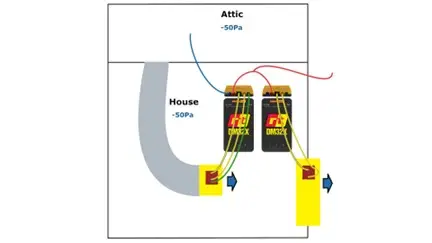
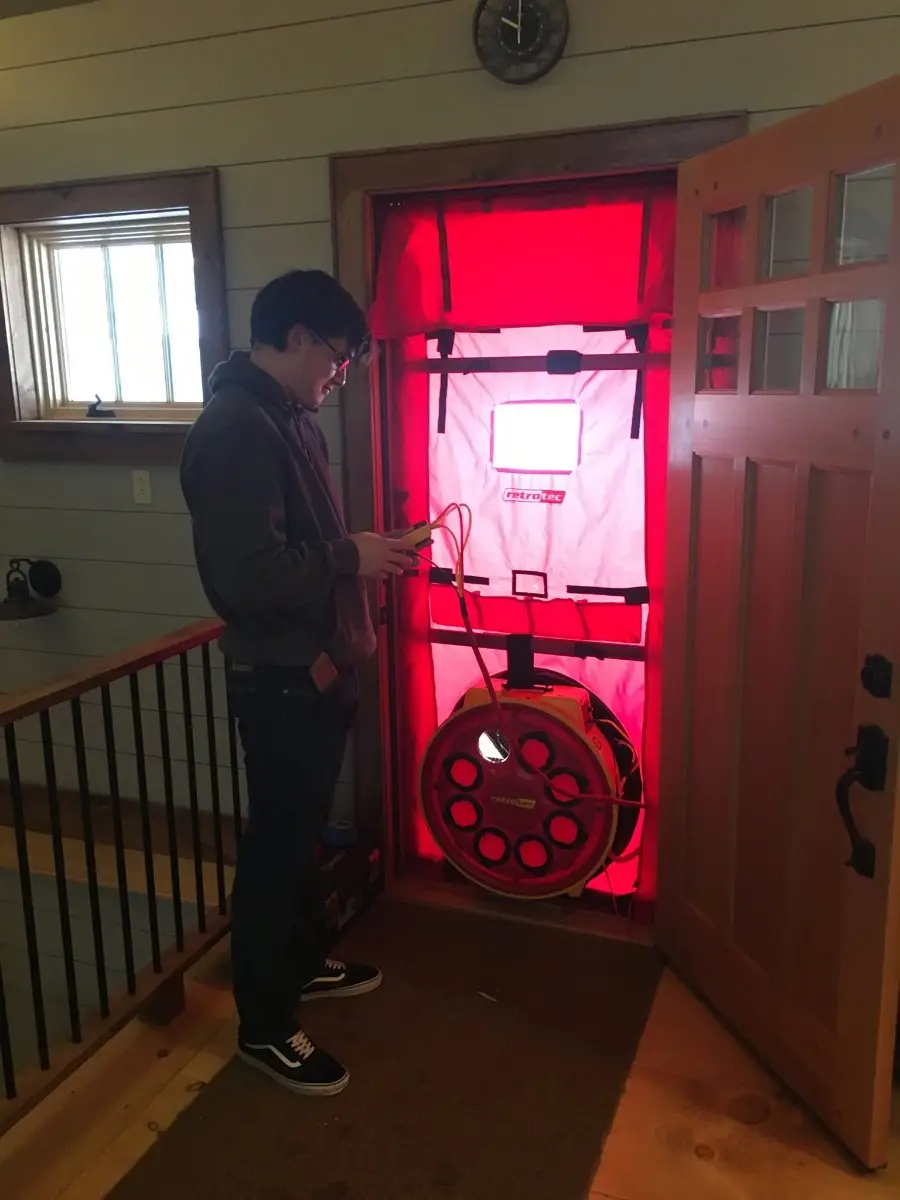
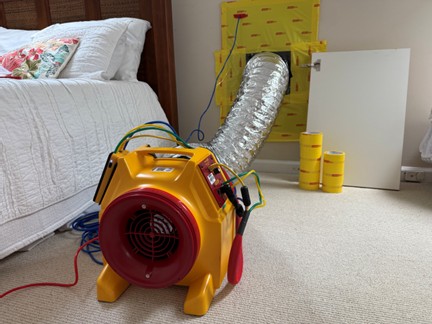
Conducted with a blower door system to pressurize and depressurize the space
Software simulates discharge behavior based on leakage characteristics
Tests are non-disruptive—no fire suppression agent is actually released
Results help guide vent sizing, room sealing, and system commissioning
This allows safe and accurate performance verification before system activation.