IECC Code Compliance Tests. This video reviews:
- Requirements & Compliance
- Who can perform the test
- Duct Test
- Envelope tightness
- Blower Door test
- Air Barrier 101
- IECC 2015 blower door test requirements
Requirements & Compliance Overview
The IECC 2015 mandates performance-based testing for building envelope tightness and duct leakage
Blower door and duct tests must demonstrate that the home meets specific air leakage thresholds
These standards help ensure homes are energy-efficient, comfortable, and well-sealed
Compliance is required for both new construction and certain major renovations in jurisdictions that have adopted IECC 2015.
Who Can Perform the Test?
Testing must be performed by qualified professionals
Depending on local jurisdiction, this may include HERS raters, certified energy auditors, or ICC-recognized inspectors
Testers must follow approved procedures using calibrated equipment
Check your state or local code for specific credential requirements.
Duct Test
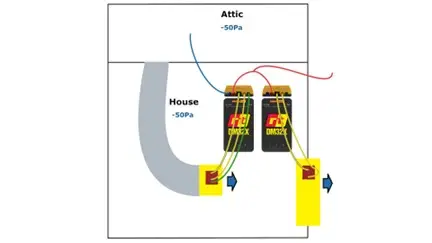
Duct leakage testing measures how much air escapes from HVAC ducts
Required if ducts are located outside the building envelope (e.g., in attics or garages)
Ducts must not exceed 4–8 CFM per 100 square feet of conditioned floor area, depending on the method used and whether the system is tested at rough-in or final
Tests can be conducted using a duct tester or blower door with pressure pans.
Envelope Tightness
Refers to the air leakage through walls, ceilings, floors, and other parts of the building envelope
Measured using a blower door test
The 2015 IECC requires most homes to achieve ≤3 or ≤5 ACH50 (air changes per hour at 50 Pascals), depending on climate zone
Proper air sealing and air barrier continuity are critical to passing.
Blower Door Test
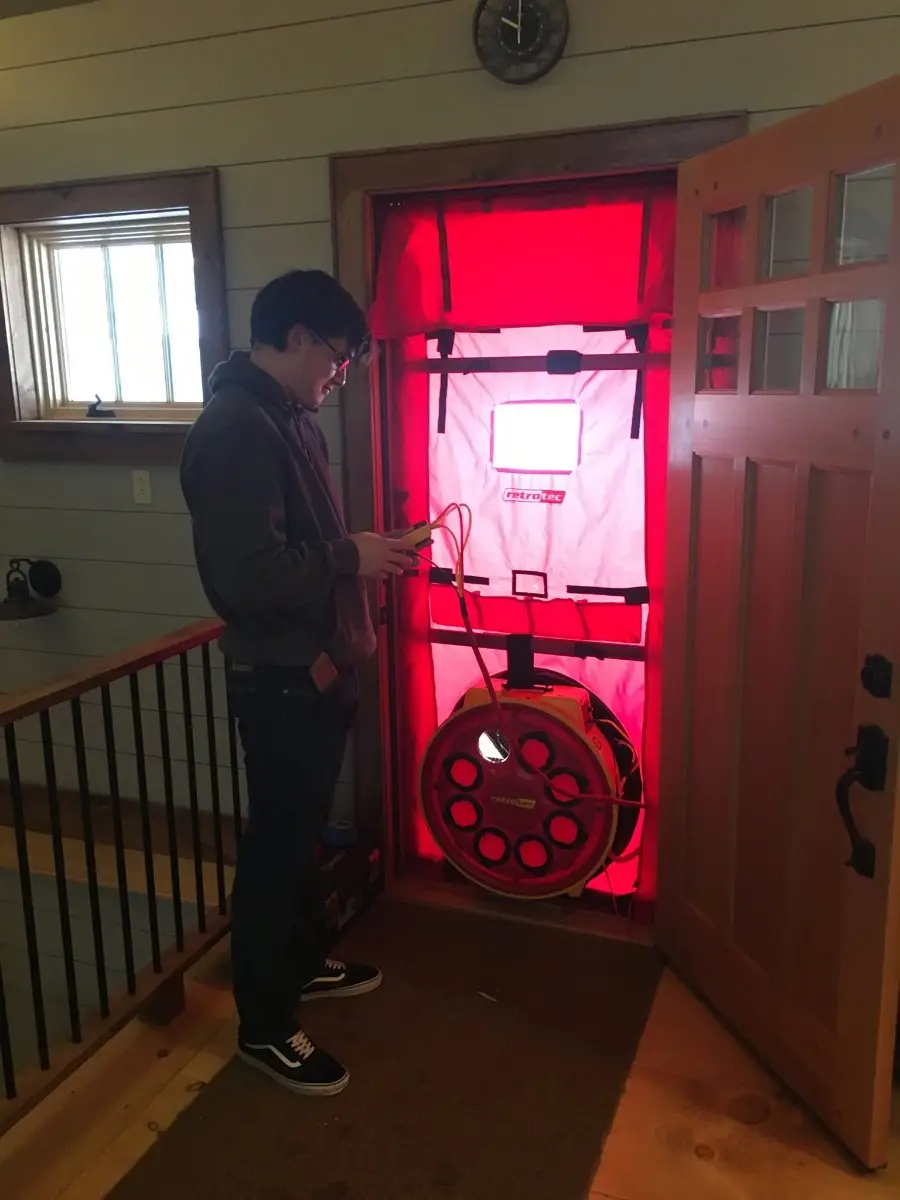
Used to measure whole-house air leakage
Conducted by depressurizing or pressurizing the house to 50 Pascals and recording airflow
Blower door test results help verify that the building envelope meets air leakage limits
Also helps identify hidden leaks and insulation gaps when paired with infrared cameras.
Air Barrier 101
Air barriers must be continuous and properly sealed at all seams, edges, and penetrations
Materials like drywall, rigid foam, and sheathing tape can serve as air barriers
Inspectors may visually verify barrier continuity or use testing to confirm performance
Good air barrier design is essential to meeting blower door targets.
IECC 2015 Blower Door Test Requirements
ACH50 thresholds:
≤3 ACH50 in most climate zones
≤5 ACH50 in milder zones
Must be performed on each unit or dwelling in multifamily housing
Failures often result from poor sealing at top plates, attic hatches, and rim joists
Achieving compliance starts with proper planning during design and framing stages.