Know the accuracy of your blower door or duct testing fan. Watch a video highlighting:
- What’s inside the fan (or Fan Deconstructed)
- Important fan accuracy requirements
- What factors cause high uncertainty %
- How to reduce uncertainty testing methods
Browse blower doors and duct testing equipment from Retrotec, and sign up for upcoming webinars to find related information. For any specific questions related to our products, contact our sales team directly at 1 (855) 738-7683.
The Fan Deconstructed
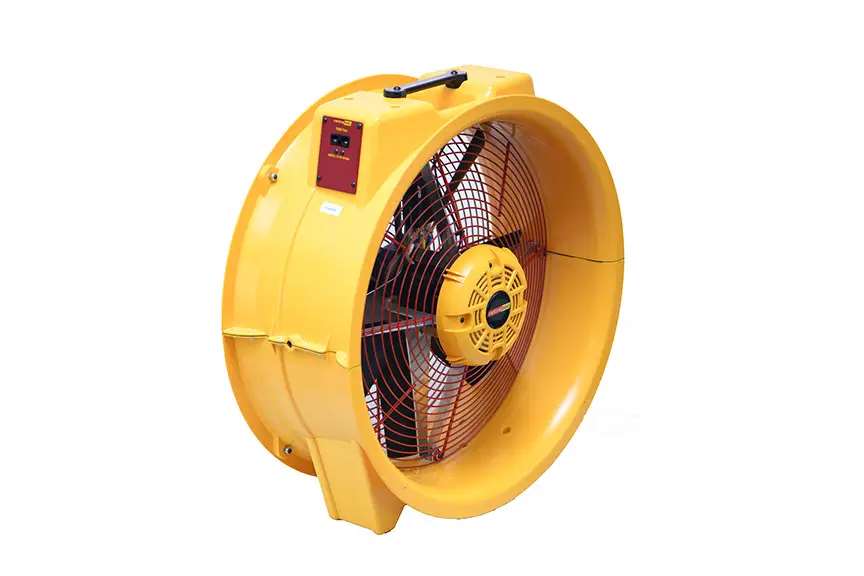
Most Retrotec blower-door and DucTester fans use sealed motors with calibrated blades and optional control ports.
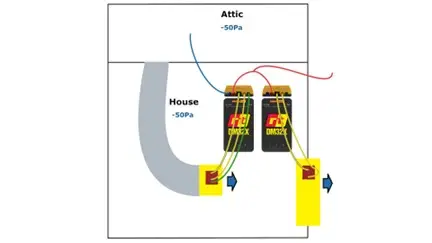
Fans include designated speed-control ports (e.g. “Control A” and “Control B”) to allow external regulation via gauges like the DM‑32.
Internally, clear mechanical ranges and airflow ratings are defined per model (e.g. Model 5000, 7310, 7000) during factory calibration.
Essential Fan Accuracy Requirements
Retrotec calibrates each fan to ISO/IEC 17025 standards with traceability to NIST—a guarantee of quality performance.
Calibration labels and certificates are shipped with each fan, typically valid for five years unless field tests rule otherwise.
Fans are paired with standard range plates or rings; each combination is factory verified for accuracy within a small percentage range.
What Causes Measurement Uncertainty?
High uncertainty in results often stems from:
Wrong fan selection or warming up a cold motor
Using incorrect range plate or control settings
Tubing issues (kinks, moisture, movement, loose fittings)
Unstable baseline pressure or insufficient time averaging
Environmental factors, especially wind interference or poor sealing
When combined, these issues can cause test variance up to ±10–20%, far outweighing gauge drift.
How to Reduce Testing Uncertainty
Pre-warm and stabilize fan speed before testing.
Confirm correct range plate and device configuration (via gauge menu) for your setup.
Use longer averaging intervals (e.g. 10 s) and frequent baseline recalibration.
Secure tubing properly and shield from wind; keep it upright and free from kinks.
Test for moisture or leaks in tubing before starting.
When practical, a cross-port gauge verification and even secondary control gauge comparison can identify errors early.
Why QA ≥ QC for Better Accuracy
Quality Assurance (QA) emphasizes trained workflows, equipment checks, and repeatable procedures—catching issues before they occur.
Quality Control (QC) relies on post-test checks and often can’t recover lost time in the field.
Investing in standardized training (via Retrotec courses or internal certification) typically yields more accurate results than solely enforcing QC reviews.
Matching Process to Testing Scenario
| Scenario | Best Practice Test Approach |
|---|---|
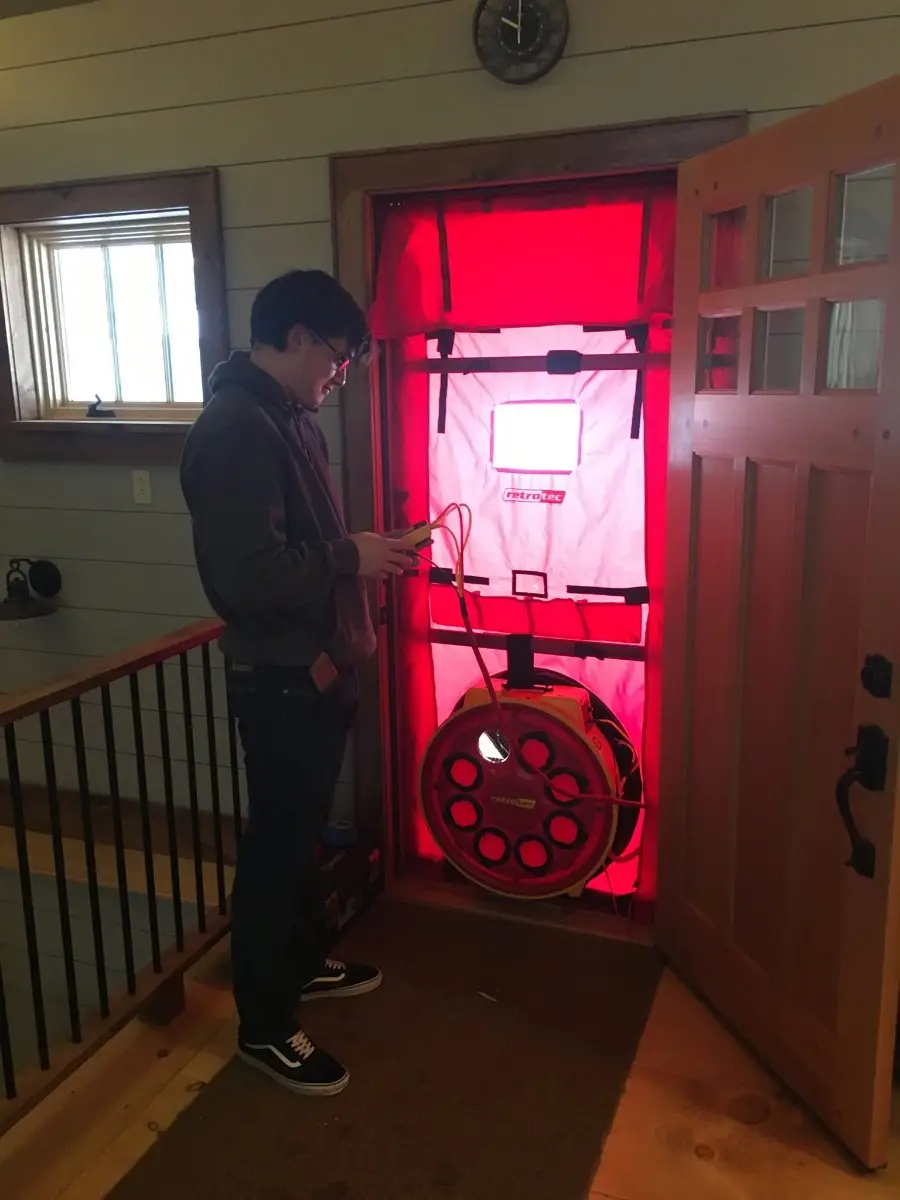
| Small home or single-family | Single-fan blower-door test with proper plate and settings |
| Multi-family / mid-rise | Multi-fan, multi-point testing (e.g. Model 7310 fans) |
| Duct leakage to outside | DucTester + DM‑32 in pressurization or depressurization |
| Exhaust / ventilation flow | TEC flow meter or converted blower-door as powered flow hood |