This five part series looks what an air leakage test of a typical house might look at. In this part, we take a look at a duct leakage to outdoors test. In some cases, this is more important than a total duct leakage test, as this test narrows down the duct leakage to only the energy lost to the outdoors.
Test Set-up
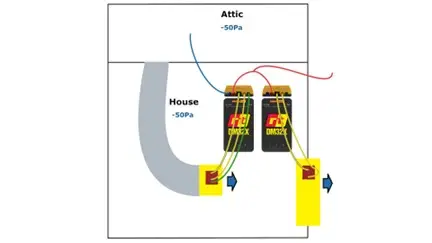
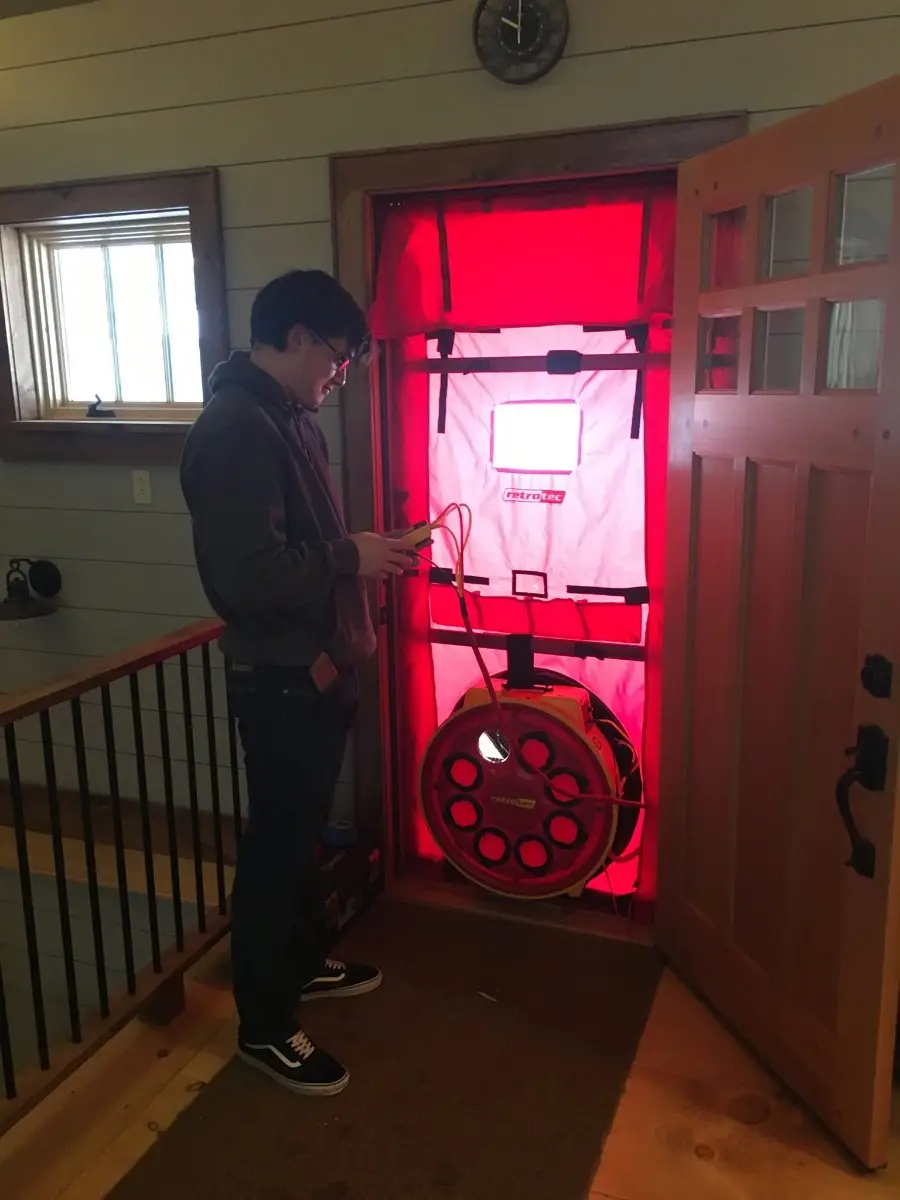
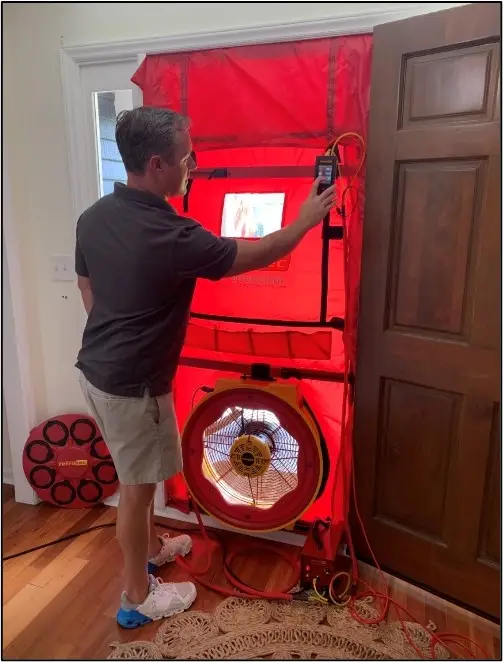
Equipment: A Retrotec DucTester fan is connected to the duct system, typically at the return side, using a flexible duct and flange.
Preparation: All supply and return registers are sealed with tape to prevent air from entering or exiting through them.
Outdoor Reference: A slight outdoor pressure reference is established by leaving a door or window open, ensuring accurate measurements.
Test Procedures
- Fan Activation: The DucTester fan is activated to pressurize the duct system.
- Pressure Measurement: The manometer records the pressure differential between the inside of the ducts and the outdoors.
- Airflow Calculation: The airflow required to maintain the pressure differential is measured, indicating the amount of air leaking from the ducts to the outside.
Importance of the Test
Energy Efficiency: Identifies how much conditioned air is lost to the outdoors, leading to potential energy savings when addressed.
Building Performance: Helps in assessing the overall performance of the HVAC system and the building’s envelope.
Code Compliance: Ensures the building meets local energy codes and standards for duct tightness.
This test is a critical step in building performance assessments and is often required for energy audits, home inspections, and certification programs like LEED or HERS.