
Techniques for bundling units or testing single apartments within larger structures.
Emphasized measuring both envelope leakage (entire building shell) and unit-to-unit leakage for energy compliance and performance tracking.
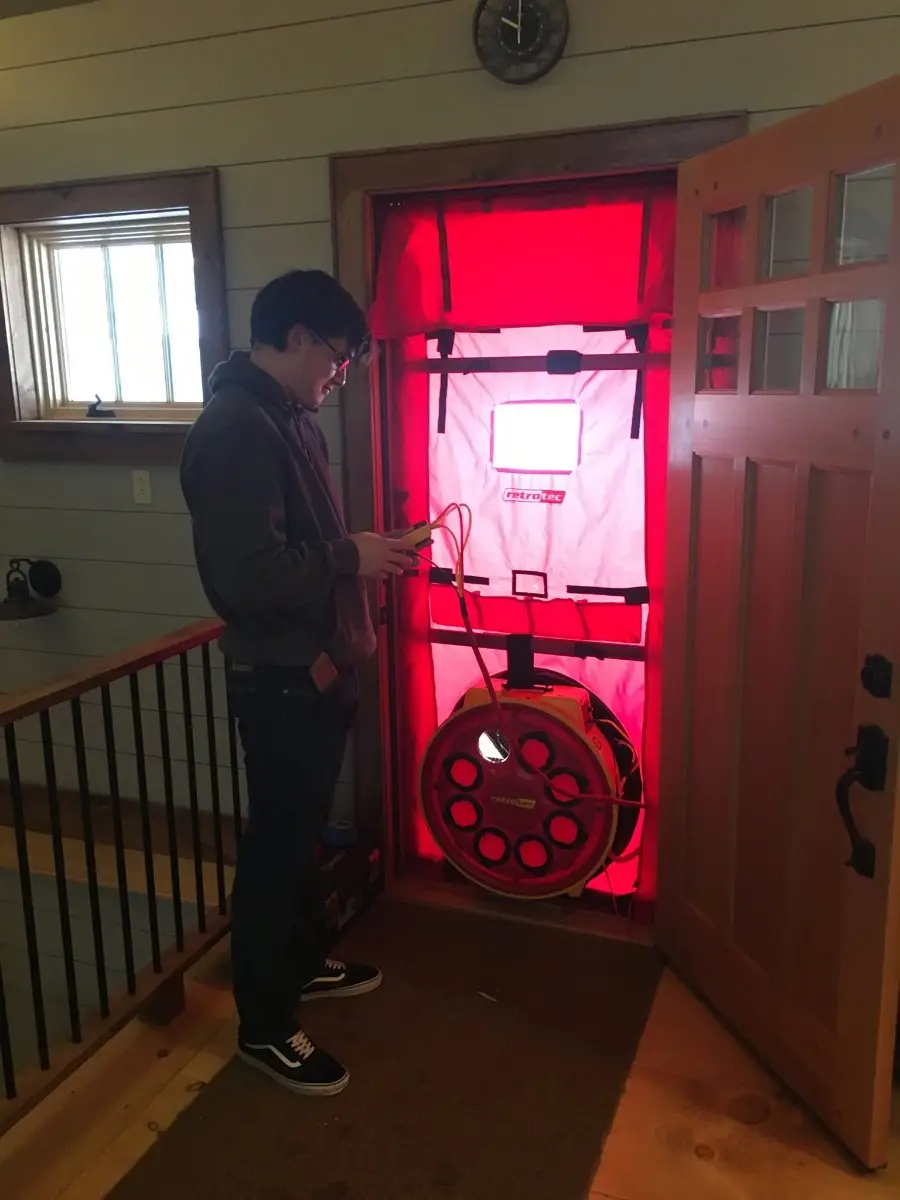
Importance of using multiple blower-door fans or high-volume calibrated fans to achieve required pressure differentials in large spaces.
Recommended ranges of fan capacity and proper sealing techniques suited to larger envelopes.
Demonstration of flow vs. pressure curves for buildings, showing how to interpret and analyze the data.
Use of multiple test points to confirm leakage exponent and ensure consistency across larger pressure spans.
How to seal large openings (garage doors, vestibules) effectively and troubleshoot re-entry leakage paths.
Maintaining stable house pressure with blower doors when combating stack effect or strong wind conditions.
Aligning large-building tests with protocols like ASTM E779, SMACNA, and EN 13829.
Calculation of air changes per hour (ACH50) across extensive floor areas, and handling per-unit or per-volume reporting metrics.
Expands Skills to Larger Structures: Ideal for auditors or HVAC professionals moving into apartment buildings, condos, or other multi-residential jobs.
Improves Accuracy at Scale: Ensures test integrity despite increased envelope complexity.
Supports Compliance & Reporting: Data produced aligns with major industry standards and codes.