When Is Leakage to Outdoors Testing Required?
Often mandated by energy codes (IECC, RESNET, ENERGY STAR) when ducts run through unconditioned spaces
Required in programs where total duct leakage tests aren’t sufficient for determining system efficiency
Especially relevant for homes with attic ductwork, crawlspaces, or partially conditioned basements
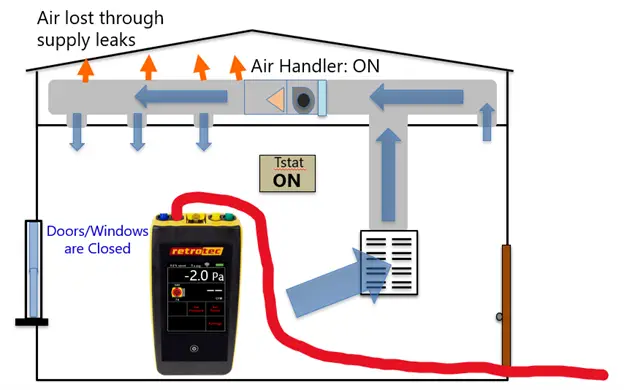
It provides a more accurate representation of energy loss compared to total leakage.
Setup Options for LTO Testing
There are two common methods:
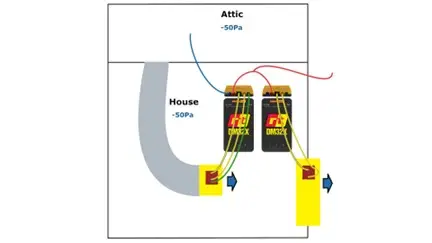
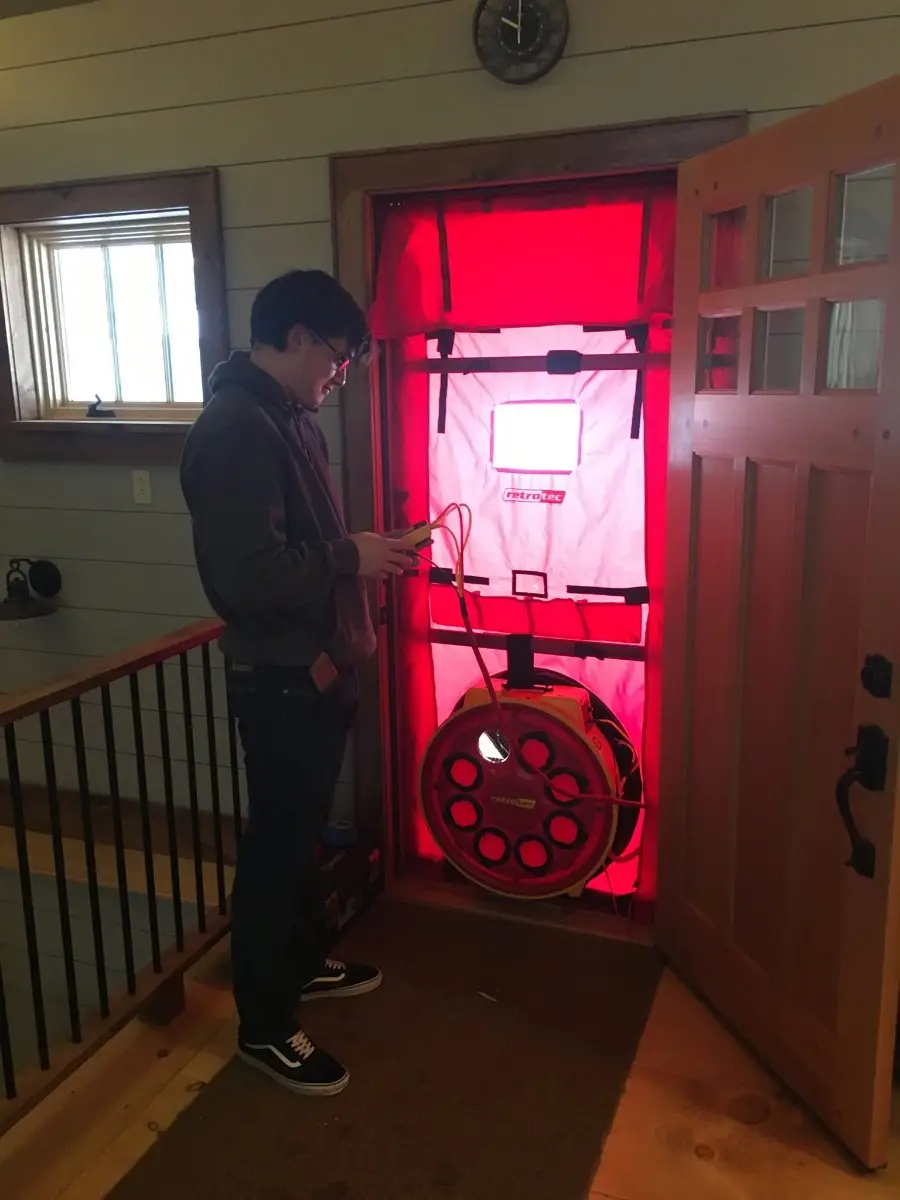
Blower Door and Duct Tester Combination:
The home is depressurized to simulate worst-case infiltration
The duct tester then measures leakage escaping to outside the envelope
Pressure Matching Method:
Balances pressure in the ducts and the house to isolate leakage specifically to outside
Often used in more precise or advanced diagnostics
Proper setup is critical for separating internal leakage (to conditioned spaces) from external loss.
Complex Setups for Larger or Multi-Zone Systems
Multi-zone HVAC systems or unusually laid-out homes may require additional pressure measurements
Using multiple pressure reference points or additional gauges helps ensure test integrity
May involve zonal pressure diagnostics to track leakage paths across boundaries
Advanced setups often appear in audits of custom homes, multifamily units, or retrofit projects.
Additional LTO Tests and Applications
Pre/post-retrofit comparisons to verify duct sealing effectiveness
Testing duct tightness in relation to building depressurization effects
Integrating data with energy modeling tools to calculate actual energy impact of leakage
Can be used in training to demonstrate leakage behaviors not evident in total leakage tests
This level of testing can identify energy losses and comfort issues that simpler tests might miss.