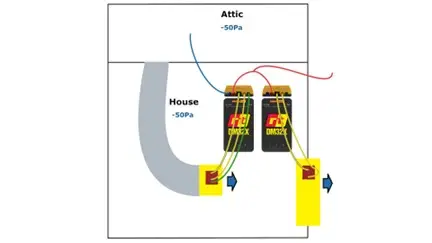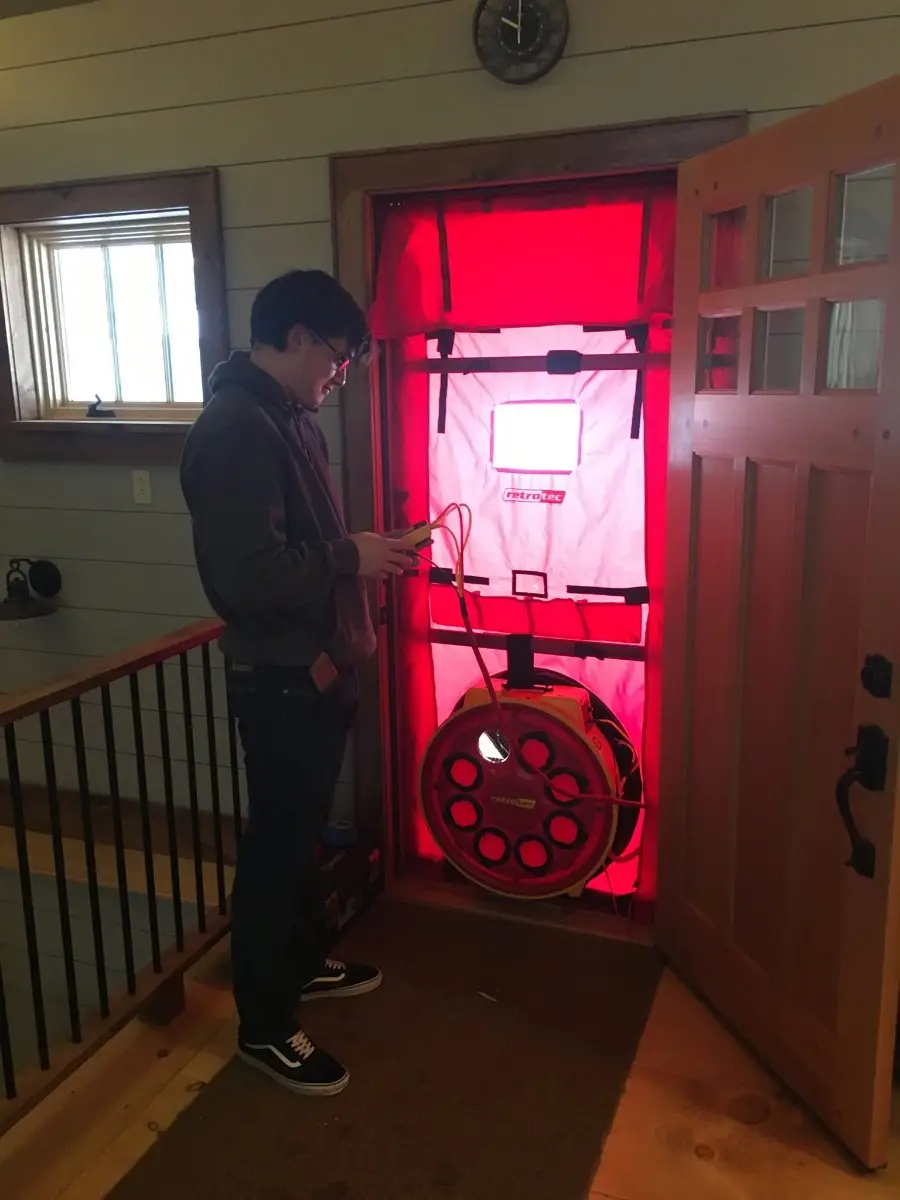
Part 6 Is a brief video that explains the importance of setting up correctly for an auto-test.
Essential Pre-Auto-Test Steps
Equipment & Calibration Check
Confirm all instruments—blower fan, manometers, and tubing—are properly installed and zeroed.
Verify sensor calibration to prevent data drift during automated pressure steps.
Baseline Pressure Measurement
Record initial pressure differences without the fan running.
This baseline accounts for natural forces (wind, stack effect), ensuring accurate test results.
Test Parameters Review
Double-check building inputs: volume, surface area, standard (ASTM, ISO, ATTMA), and selected pressure targets.
Ensure auto-test settings—step order, stabilization times, flow averaging—match project needs.
Fan Range & Speed Setup
Select appropriate range plate configuration to cover expected pressures.
Confirm FanTestic controls fan speed accurately across pressure points for consistent performance.
Stabilization & Data Logging Settings
Define hold and averaging times to ensure data stability at each pressure step.
Set clear stability criteria so the software knows when to record data.
Safety & Pause Options
Familiarize yourself with pause/resume functions in case adjustments are needed mid-test.
Establish threshold limits to automatically pause if abnormal conditions occur.
Why this Matters
Accuracy – Proper setup ensures baseline and pressure offsets are correctly compensated.
Consistency – Controls and hold parameters prevent unreliable or unstable readings.
Smooth Workflow – Catching setup issues early reduces interruptions and saves time.