Depressurization vs. Pressurization Tests — Understanding the Difference
Both methods are acceptable for duct leakage testing—each with strengths depending on test location and purpose:
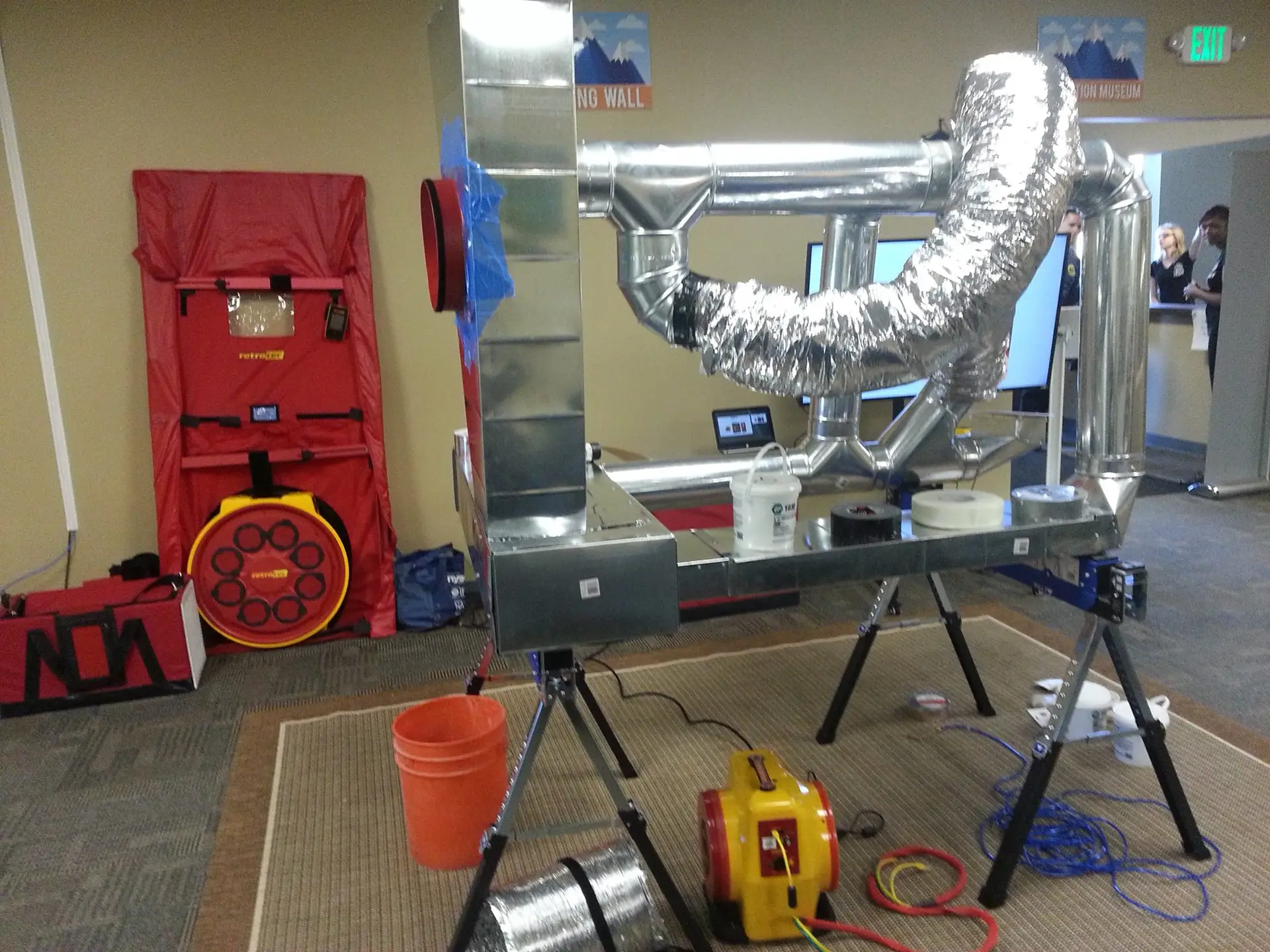
Depressurization: Creates negative pressure inside the duct using a calibrated blower (e.g., DuctTester or TEC fan) to pull air out through leaks.
Pressurization: Pushes air into the duct system to increase internal pressure, causing air to leak outward.
Why choose one over the other?
Pressurization is preferred when ducts are in unconditioned spaces (e.g., attic or crawlspace), as it prevents pulling in contaminants.
Depressurization is commonly used for duct systems within the thermal envelope, offering reliable results.
Both follow standard testing protocols like ASTM E1554, ANSI/RESNET/ICC 380, and ASHRAE 90.1 ±25 Pa requirement.
Code & Third-Party Requirements
Under modern energy codes such as IECC 2021, duct leakage testing is mandatory—even when all ducts are inside the thermal envelope:
κ ≤ 8 CFM25 per 100 ft² if inside conditioned space
κ ≤ 4 CFM25 per 100 ft² if ducts exit outside enclosure
Testing must occur post‑construction or at rough‑in (air handler may or may not be installed).
Meet ANSI/RESNET/ICC 380 and ASTM E1554 protocols for air volume vs. pressure curves.
Third-party programs like ENERGY STAR v3 have their own thresholds—e.g., ≤ 4 CFM25 per 100 ft² rough‑in and ≤ 8 CFM25 final.
Testing Methods: Pan, Hood, Flow Meter, and More
Pressure Pan Method (Qualitative)
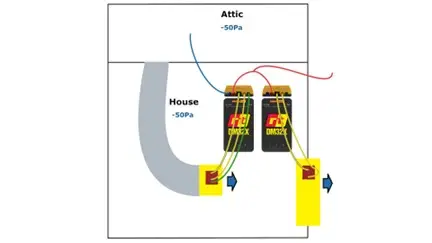
Conducted during blower-door test: cover each register with a pressure pan and record the differential.
Reveals which registers leak to the outside; qualitative—not CFM quantified.
Passive Flow Hood
Also known as flow pan; measures exhaust fan CFM by capturing flow from a grille.
Ideal for verifying ventilation, not duct leakage to outside directly.
Powered Flow Hood
Fan-assisted flow hoods measure velocity and area.
Useful for local exhaust validation, less so for duct system leakage tests.
Blower Door Subtraction Method
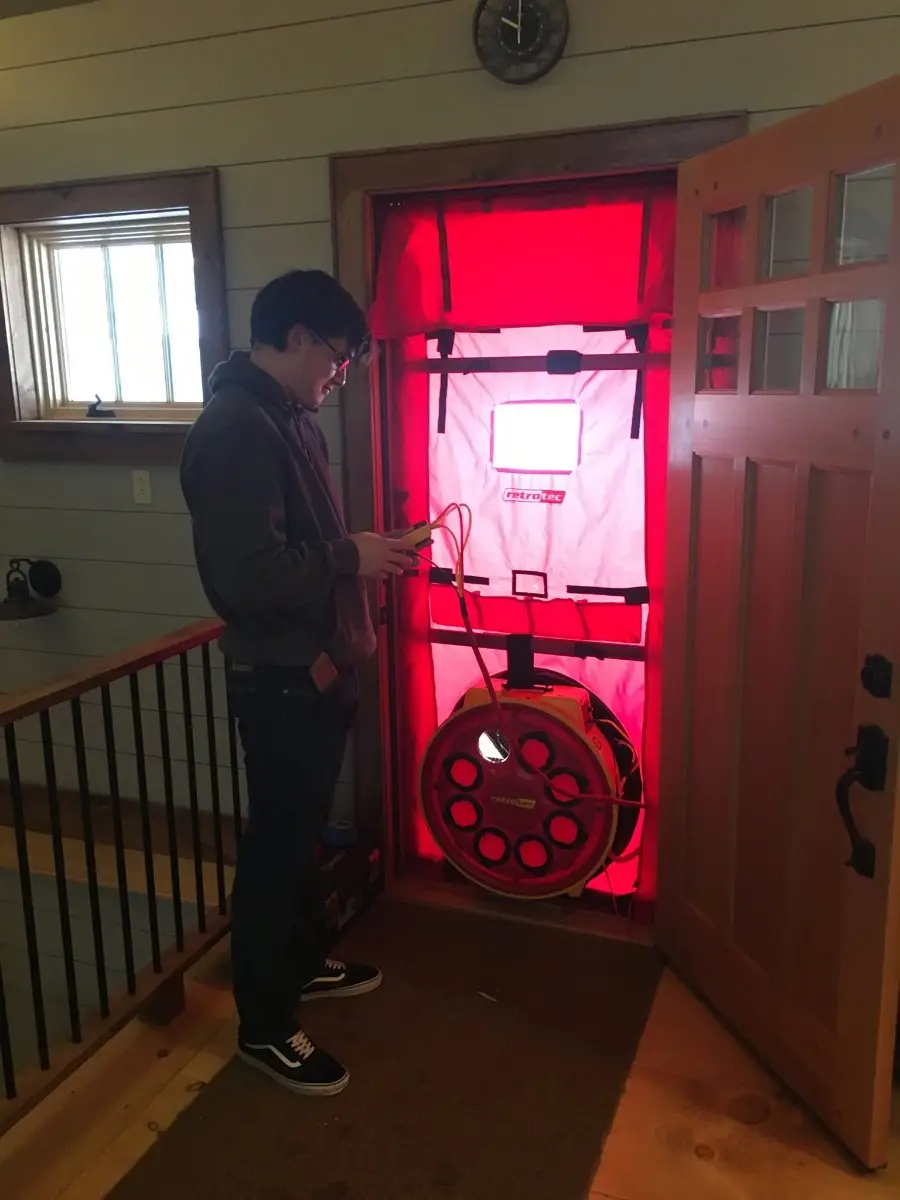
Records house leakage with open registers, then again with all registers taped.
Use correction factors to calculate duct leakage to the outside.
Unique Products & Strategies to Simplify Testing
Range plates and flow probes tailor fan output and pressure range for optimal testing.
Specialized register plugs, grill masks, and pressure pan fittings enable clean, repeatable sealing.
High-accuracy gauges (e.g., DM‑32) with WiFi and data logging simplify capturing and reporting leakage tests compliance.
Digital tools like GaugeRemote or Virtual Gauge make setup and oversight easier, especially for third-party QA or multilingual crews.