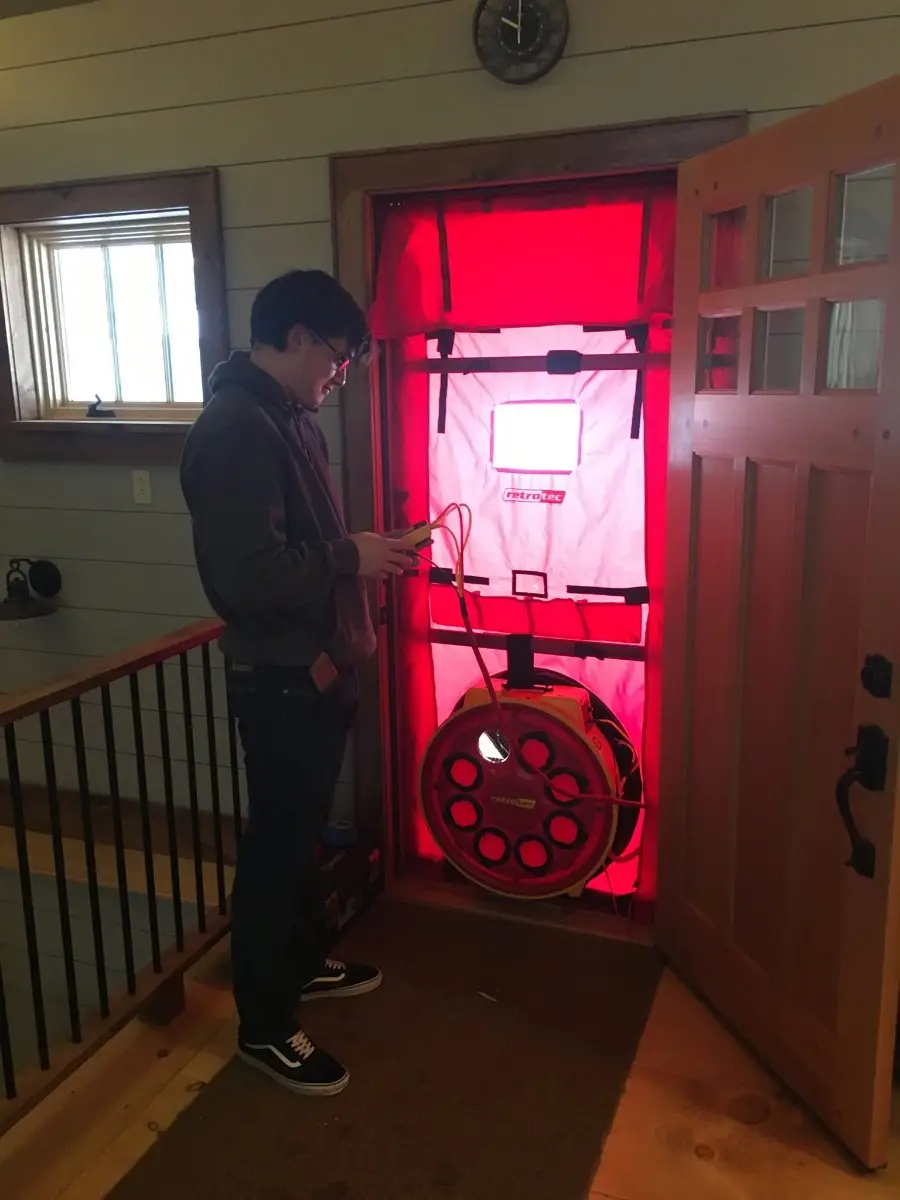

A commercial pan like Energy Conservatory’s Flow Meter captures airflow from exhaust fans. Place it over the grille to measure CFM directly.
Pro tip: Good for quick diagnostics on bathroom or kitchen fans.
A DIY version made from a cardboard box and static-pressure gages.
Pros: Cost-effective, simple.
Cons: Less accurate—calibrate before use for better results.
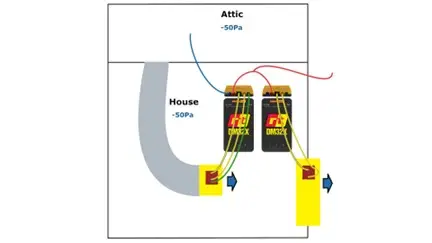
Connect a flow probe upstream of the fan and adjust speed until pressure equals the home’s pressure difference.
Great for: Precise airflow matching—especially in ventilation systems.
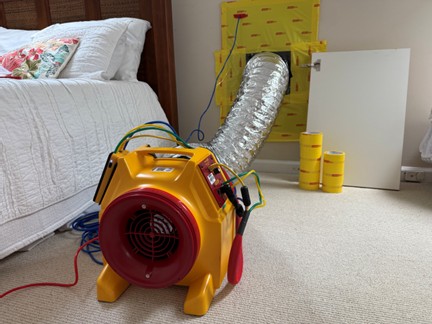
Similar to method #3, but uses the DucTester fan to back-pressurize the system.
Benefit: Great accuracy for duct and ventilation system flows.
Using a Pitot tube in ducts along with a manometer to calculate airflow from differential pressure.
Use case: More technical—ideal for HVAC duct systems with straight runs.
Hand-held device (e.g., Testo 416) inserted into grilles to measure airflow velocity and calculate flow.
Pros: Portable and fast.
Cons: Requires precise area measurements for accurate readings.
Larger version (like Testo 417) for bigger vents and higher flow rates.
Best for: Commercial or large residential systems.
Hold a lightweight 30-gallon bag over the register and time how long it takes to inflate.
DIY advantage: No special tools needed—though accuracy varies.
Quick diagnostics: Use the pan or plastic bag.
Moderate accuracy: Vane anemometers and pitot tubes.
Professional-level accuracy: Pressure matching with FlowFinder or DucTester.